
Moving a refrigerator ranks among the most intimidating DIY hauling jobs. It’s bulky, heavy, and rumors about damaged compressors can make anyone nervous. So can you lay a refrigerator on its side when transporting it? The short answer: yes, but only as a last resort and with proper precautions. Laying a fridge down incorrectly, or leaving it horizontal too long, can push compressor oil into cooling lines and cause serious damage. But tight doorways, narrow staircases, and vehicle clearance sometimes leave no other option. This guide covers when it’s acceptable to transport a refrigerator laying down, how to do it safely, and what steps to take afterward to protect your appliance and your investment.
Table of Contents
ToggleKey Takeaways
- You can lay a refrigerator on its side during transport, but only as a last resort when upright positioning is physically impossible due to doorway or clearance constraints.
- Laying a refrigerator down risks pushing compressor oil into cooling lines, which can cause the compressor to overheat or fail when powered on, making proper post-move waiting time critical.
- Always wait at least 4 hours (or as long as the fridge was horizontal) before plugging in your refrigerator after moving it on its side, allowing gravity to pull the oil back into the compressor housing.
- Identify the correct side opposite the compressor and refrigerant lines before laying down your refrigerator, and keep total horizontal time under 30 minutes to minimize oil migration.
- Professional movers, taller rental trucks, or removing obstacles like door frames are safer alternatives that cost less than repairing a damaged compressor, which can approach half the price of a new unit.
- Listen for unusual noises like grinding or clicking after moving, and call a technician immediately if the refrigerator doesn’t cool properly within 6–8 hours, as compressor damage requires professional repair.
Why Laying a Refrigerator on Its Side Is Risky (But Sometimes Necessary)
Refrigerators aren’t designed to operate or rest horizontally, and laying one down can interfere with internal components. The biggest concern is the compressor oil, a lubricant that sits in the compressor at the bottom of the unit. When the fridge tilts or lays flat, oil can flow out of the compressor and migrate into the sealed refrigerant lines. Once oil blocks those lines, the cooling system can’t circulate refrigerant properly, leading to reduced efficiency or total compressor failure.
That said, is it ok to lay a refrigerator on its side? Yes, if you’re out of alternatives. Tight doorways, truck bed height, and apartment stairwells sometimes force the issue. Manufacturers generally advise keeping refrigerators upright during transport, but most models can tolerate brief horizontal positioning if handled correctly. The key is minimizing tilt time and letting the unit rest upright afterward.
How the Compressor and Oil Work
The compressor is the heart of the cooling system. It compresses refrigerant gas, which then flows through condenser coils, evaporator coils, and back again in a continuous loop. Compressor oil stays in the compressor housing under normal operation, lubricating pistons and seals. Gravity and the sealed design keep oil where it belongs, vertically.
When you haul a refrigerator on its side, gravity works against you. Oil seeps into the refrigerant lines, which are only designed to carry gas and liquid refrigerant, not thick lubricant. If you plug the fridge in immediately after moving, the compressor tries to pump oil-clogged refrigerant, overheating and potentially burning out. That’s why waiting before powering up is critical.
When It’s Acceptable to Lay Your Fridge Down
Can you transport a refrigerator on its side without voiding warranties or causing damage? It depends on the model and circumstances. Check your owner’s manual first, some manufacturers explicitly prohibit horizontal transport, while others allow it with conditions.
Acceptable scenarios:
- No other physical option. Doorway clearance, truck bed dimensions, or stairwell turns make upright transport impossible.
- Short duration. The fridge will be horizontal for an hour or less during loading, driving, and unloading.
- Proper side selection. You’re laying it on the side opposite the compressor lines (more on this below).
- Adequate rest time afterward. You can let the fridge stand upright for the recommended period before plugging in.
When to avoid laying it down:
- The manual forbids it (especially common in high-end or commercial models).
- You’re moving it solo and can’t stabilize it safely.
- The fridge will be in transit for several hours or overnight.
- It’s an older unit with a history of compressor issues.
If you can rent a taller moving truck, hire professional movers with a dolly and ramp setup, or recruit extra hands to keep it upright, do that instead. But for most homeowners moving a standard top-freezer or side-by-side model in a pickup or SUV, laying it down carefully is workable.
Step-by-Step: How to Safely Lay a Refrigerator on Its Side
Can you lay a refrigerator down for transport without wrecking it? Yes, if you follow a methodical approach. Rushing this step is where most DIY damage happens.
Preparing Your Fridge for Transport
1. Empty and defrost the unit.
Remove all food, shelves, and drawers. If there’s an ice maker, disconnect the water line and let any ice melt. Defrosting prevents water from sloshing around and leaking into electrical components during the move. Allow at least 4–6 hours for full defrosting, or overnight if the freezer is heavily iced.
2. Unplug and secure doors.
Disconnect power at least 2 hours before moving to let the compressor cool down. Use moving straps or rope to secure doors shut, don’t rely on the latch alone. Tape can leave residue: a ratchet strap over the door (protected with a towel to avoid scratching) works better.
3. Identify the correct side.
Inspect the back of the fridge to locate the compressor (a black cylindrical or rectangular component near the bottom). The refrigerant lines run from the compressor to the evaporator. Lay the fridge on the side opposite those lines to minimize oil migration. If you can’t tell which side is which, consult the manual or search your model number online. When in doubt, appliance safety guides often recommend the right side for most top-freezer models.
4. Use an appliance dolly.
A standard hand truck won’t cut it. Rent or buy an appliance dolly with a strap and wide base. Tilt the fridge back onto the dolly while it’s still upright, secure it, and roll it to your vehicle. Never drag a fridge across floors, you’ll damage the floor and the compressor mounts.
5. Lower it gently.
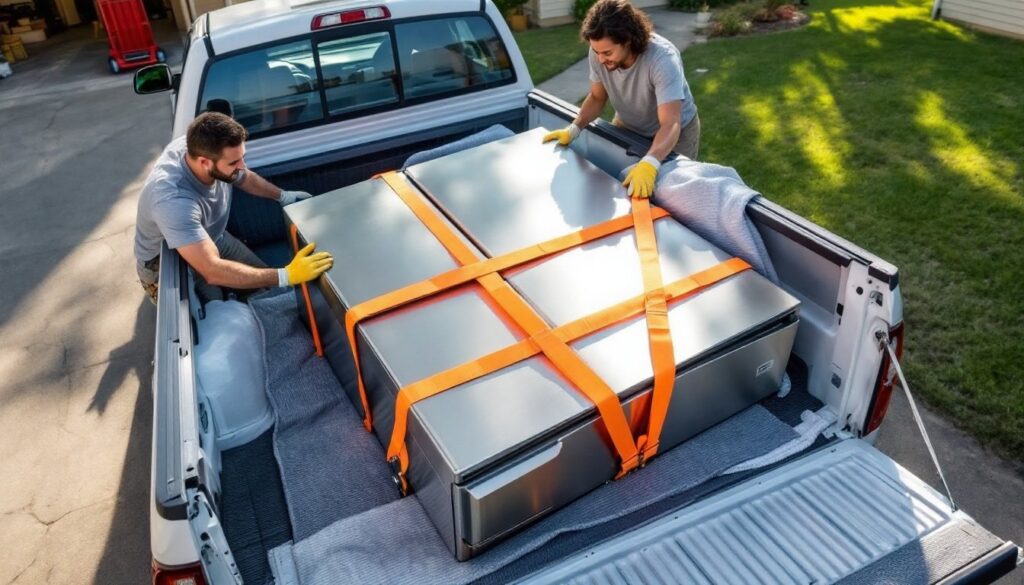
With help, tilt the dolly and fridge slowly onto the truck bed or trailer. Use furniture pads or moving blankets underneath to cushion and protect the exterior. Avoid slamming it down. Once horizontal, secure it with tie-down straps to prevent sliding during transit.
6. Minimize horizontal time.
Drive carefully, no hard braking or sharp turns. The less time the fridge spends on its side, the less oil migrates. If possible, keep total horizontal time under 30 minutes.
How Long to Wait Before Plugging In After Moving
This is the step most people skip, and the one that kills compressors. How long can a refrigerator lay on its back or side before it’s safe to power up? The standard rule: let it stand upright for at least as long as it was laid down, with a minimum of 4 hours.
If the fridge was horizontal for 30 minutes, wait 4 hours. If it was on its side for 2 hours, wait 4–6 hours. Some manufacturers and home organization experts recommend a full 24 hours for side-by-side or French-door models, which have more complex refrigerant routing.
Why the wait? Gravity needs time to pull the compressor oil back into the compressor housing. Plugging in too soon forces the compressor to run with oil-starved parts or clogged lines, causing overheating and permanent damage. You won’t see immediate failure, it might run for a few days or weeks, then quit.
Steps after moving:
- Set the fridge upright in its final location. Level it using adjustable feet. An unlevel fridge strains the compressor and causes door seal issues.
- Wait the recommended time. Set a timer if needed. Resist the urge to “just check” if it works.
- Plug it in and monitor. Listen for unusual noises, grinding, rattling, or clicking can signal oil blockage. The compressor should hum quietly and cycle on and off normally.
- Give it 2–4 hours to cool. Don’t load food immediately. Let the interior reach target temperature first.
If the fridge doesn’t cool after 6–8 hours, or if you hear loud clicking and no cooling, unplug it and call a technician. Compressor damage from improper moving is repairable in some cases, but often requires a replacement compressor, a cost that can approach half the price of a new unit.
Alternative Moving Methods to Avoid Laying It Down
Can you transport a refrigerator laying down without stress? Sure, but avoiding horizontal transport altogether is even better. Here are practical alternatives that keep the fridge upright and reduce risk.
Rent a taller moving truck.
Box trucks and cargo vans from rental companies offer 6–7 feet of interior height, enough clearance for most full-size refrigerators. A 10-foot truck costs $30–$50 for a local move (prices vary by region and fuel costs in 2026). The extra headroom eliminates the need to tilt or lay down the unit.
Hire appliance movers.
Professional movers have the tools and experience to navigate tight spaces while keeping appliances upright. Expect to pay $100–$200 for local appliance-only moves. They carry appliance dollies, ramps, and stair-climbing equipment that DIYers don’t usually own. If your fridge is worth over $1,000 or has complex features (water lines, ice makers, smart controls), professional help is worth it.
Use a refrigerator cart with vertical support.
Some tool rental shops offer specialized fridge carts with vertical bracing and heavy-duty wheels. These allow two people to roll a fridge through narrow hallways and onto a truck ramp without tilting past 45 degrees. Not every location stocks them, so call ahead.
Disassemble obstacles, not the fridge.
Before you lay down a refrigerator for transport, measure doorways and remove doors from their hinges if needed. Most interior doors swing off hinge pins in seconds with a flathead screwdriver and hammer. Removing a door can add 2–3 inches of clearance, which is often enough to keep the fridge upright. Similarly, kitchen layout planning resources suggest checking for removable threshold strips or trim that might be blocking clearance.
Two trips with a smaller vehicle.
If you’re moving locally and have a sedan or small SUV, consider moving the fridge separately in a borrowed pickup or rented trailer. It’s more hassle than one trip, but keeping the unit vertical protects your investment.
Final tips:
Always wear gloves and steel-toe boots when moving appliances, refrigerators can weigh 200–300 pounds, and a dropped corner will crush toes. Use a spotter when navigating stairs or ramps. And if you’re ever unsure whether you can transport a fridge on its side safely, err on the side of caution and get help. A new compressor or replacement fridge costs far more than a rental truck or a couple hours of professional labor.