
Hard water leaves its mark everywhere, crusty faucets, stiff laundry, and that weird film on your dishes no matter how many times you rinse. If you’re dealing with mineral buildup and tired of scrubbing limescale, a water softener isn’t just a luxury, it’s a fix that pays for itself in saved plumbing repairs and appliance longevity. Culligan’s been in the water treatment game since 1936, and their systems are a go-to for homeowners who want softer water without guesswork. Whether you’re buying outright or considering a rental, understanding what sets Culligan apart, and what it’ll actually cost, helps you make a call that fits your home and budget.
Table of Contents
ToggleKey Takeaways
- A Culligan water softener system uses ion-exchange technology to swap hard minerals like calcium and magnesium for sodium, saving money on plumbing repairs and appliance longevity.
- Culligan’s demand-initiated regeneration adjusts based on actual water usage rather than fixed timers, reducing salt and water waste compared to conventional systems.
- Local dealer networks provide fast installation, maintenance, and service—a key advantage if you need same-day repairs or urgent support in your area.
- Culligan systems range from $1,500–$4,500 for purchase and installation, or $30–$60 monthly for rentals that include maintenance, making flexibility accessible for homeowners unsure about long-term commitment.
- Monthly salt costs ($6–$10 per bag) and annual maintenance like brine tank cleaning preserve resin performance and prevent common issues such as salt bridges or hard water creeping back.
- Professional installation through Culligan dealers ensures proper permits, correct bypass sizing, and valve programming—especially important for well water systems that may need pre-filtration for iron or sediment.
What Is a Culligan Water Softener and How Does It Work?
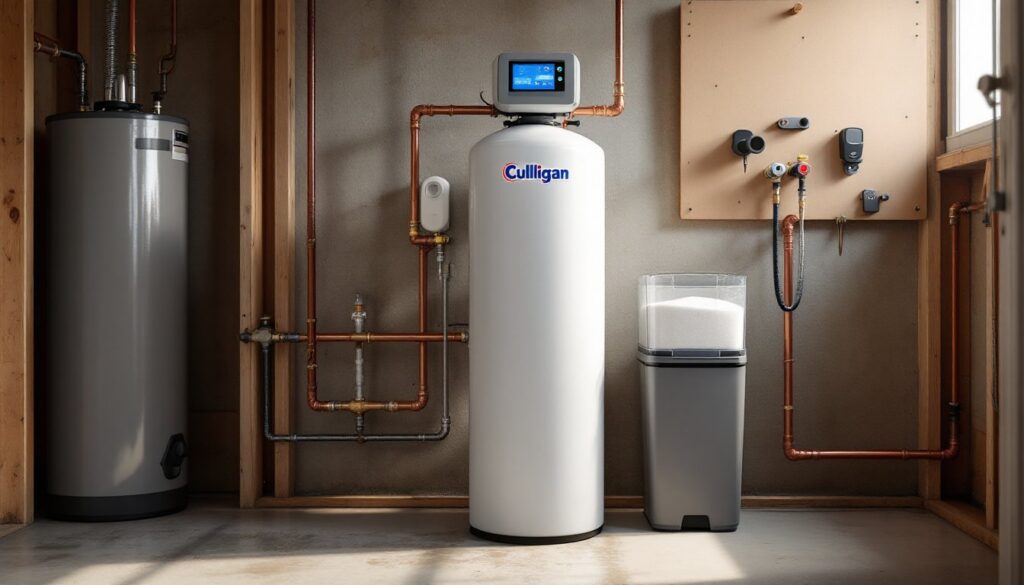
A Culligan water softener is an ion-exchange system that swaps calcium and magnesium ions (the culprits behind hard water) for sodium or potassium ions. The core component is a mineral tank filled with resin beads coated in sodium. When hard water flows through, the beads attract and trap the hardness minerals, releasing sodium in exchange. Over time, the resin gets saturated, so the system flushes itself with brine from a separate salt tank, this is the regeneration cycle, usually happening overnight.
Culligan systems use demand-initiated regeneration, meaning they regenerate based on actual water usage rather than a fixed timer. This saves salt and water compared to older models that regenerate on a schedule whether you’ve used 50 gallons or 500. The control valve monitors flow and calculates when the resin bed is exhausted. Most Culligan units also feature soft water bypass during regeneration, so you’re not stuck with hard water during the flush cycle.
You’ll need a drain line for the brine discharge, a 110V electrical outlet for the valve, and adequate space, most residential tanks are around 10 inches in diameter and 54 inches tall, plus the brine tank. If your home has a well, Culligan can integrate pre-filters to handle sediment or iron before the softener. City water hookups are more straightforward but still benefit from a sediment pre-filter to extend resin life.
Key Features That Set Culligan Apart from Other Brands
Culligan’s dealer network is the standout. They operate through local franchises, so installation, service calls, and even salt delivery come from a nearby team rather than a national call center. If something breaks at 8 PM on a Saturday, you’re calling someone who knows your system and can get parts without waiting on a warehouse three states away.
Aqua-Sensor technology on premium models adjusts regeneration based on real-time water hardness. If you travel for a week and water usage drops, the system won’t waste salt regenerating an underused tank. Culligan’s HE (High Efficiency) series uses up to 46% less salt and 50% less water than conventional softeners, which matters if you’re in a drought-prone area or paying for municipal water and sewer by the gallon.
Their systems also come with built-in leak detection on newer models, a sensor shuts off water flow if the valve detects an anomaly. Given that a failed softener valve can dump hundreds of gallons before you notice, this isn’t just a nice-to-have. Culligan also offers smart integration on select units, letting you monitor salt levels and regeneration history from your phone. It’s handy if you’re managing a rental property or just hate surprise trips to buy softener salt.
Popular Culligan Water Softener Models for Homeowners
The Culligan HE Municipal Softener is designed for city water and handles up to 42,000 grains of hardness. That’s enough for a family of four in a home with 15-grain-per-gallon (GPG) hardness. The control head is straightforward, no touchscreen, just buttons and an LCD, and it regenerates based on usage patterns stored in memory. Retail pricing hovers around $1,800 to $2,400 before installation, depending on your dealer.
Culligan HE Twin Tank models are worth considering if you have high water demand or run appliances simultaneously. One tank regenerates while the other stays online, so you never run out of soft water. They’re bulkier and cost more upfront ($3,000+), but they’re the right call for larger households or homes with multiple bathrooms running concurrently.
For well water, the Culligan Medallist Series includes options with pre-filtration and iron removal built in. Wells often carry iron, manganese, or sulfur alongside hardness, and a standard softener won’t handle all three. The Medallist combos run $2,500 to $4,000 installed, but they replace the need for separate filters.
Culligan doesn’t sell direct to consumers online, you’ll work through a local dealer who sizes the system based on your water test, household size, and usage. That means less guesswork than ordering a generic unit from a big-box store and hoping it fits your GPG.
Installation Options: DIY vs. Professional Setup
Installing a water softener system yourself is legal in most jurisdictions, but plumbing codes vary, some municipalities require a licensed plumber for anything tied into the main supply. Check with your local building department before you start cutting pipe. You’ll also need a backflow preventer in many areas to keep softened water from contaminating the municipal supply during a pressure drop.
DIY installation requires basic plumbing skills: cutting and soldering copper (or working with PEX and SharkBite fittings), running a drain line with an air gap, and wiring a 110V plug. Budget 4–6 hours if you’re comfortable with a pipe cutter and torch. You’ll need a basin wrench, tubing cutter, Teflon tape, and possibly a hole saw if you’re routing a new drain. If your incoming water line is galvanized steel or you’re dealing with a crawlspace install, add time and frustration.
Culligan strongly recommends professional installation through their dealers. They’ll pull permits if required, size the bypass loop correctly, and program the valve based on your local water hardness. Installation typically costs $300 to $600 depending on complexity, more if you need a new drain line run or electrical work. As Family Handyman often notes in plumbing tutorials, proper drain routing with an air gap prevents siphoning and code violations that can cause headaches during a home sale.
Rental installations are always handled by Culligan. The dealer owns the equipment, so they’re not letting a homeowner install it. If you move, they’ll uninstall and relocate or terminate the lease.
Cost Breakdown: What to Expect When Buying a Culligan System
Culligan water softener prices vary by model, capacity, and region, but expect to pay between $1,500 and $4,500 for the equipment and installation combined. A basic HE Municipal model runs $1,800–$2,400 for the unit, plus $300–$600 for professional installation. Twin-tank and well-water systems push the total toward $4,000+.
Water softener rental is a popular alternative. Culligan offers monthly leases starting around $30 to $60 per month depending on the model and contract length. Rentals include installation, maintenance, and service calls, if the valve fails or the resin tank cracks, Culligan replaces it at no extra charge. Salt delivery is often bundled or available as an add-on. Over ten years, a water softener lease will cost more than buying outright, but it eliminates surprise repair bills and upfront capital.
For homeowners unsure how long they’ll stay in a property, water softener rentals offer flexibility. You’re not lugging a 200-pound tank to your next house or negotiating with a buyer over whether the softener conveys. Search for water softener rental near me to find local Culligan dealers and compare lease terms.
Operating costs include salt (around $6–$10 per 40-pound bag, lasting 6–8 weeks for an average household), a small bump in your water bill from regeneration cycles, and roughly $2–$3 per month in electricity. Factor in a resin replacement every 10–15 years ($200–$400 if you DIY, more if the dealer does it).
Regional pricing varies. According to HomeAdvisor, the cost of culligan water softener installations in the Southwest and Midwest tends to run 10–15% lower than coastal markets where labor and permitting costs are higher. Always get quotes from at least two local dealers, Culligan franchises set their own pricing, so one dealer’s quote might beat another’s by several hundred dollars.
Maintenance Tips to Keep Your Culligan System Running Smoothly
Check the salt level monthly. The brine tank should stay about half-full. If you see a hard crust or “salt bridge” floating above water, break it up with a broom handle, it blocks brine from forming and stops the regeneration cycle cold. Use high-purity softener salt (pellets or crystals, not rock salt). Impurities leave sediment that clogs the brine tank and shortens resin life.
Clean the brine tank once a year. Shut off water, disconnect the fill line, scoop out remaining salt, then vacuum or wipe out sludge at the bottom. Rinse with warm water and refill. This prevents buildup that can jam the float valve or restrict brine flow.
Inspect the resin bed every few years. If you notice hard water creeping back (spots on dishes, scale on fixtures), the resin may be fouled with iron or chlorine. Culligan dealers sell resin cleaners, pour it into the brine tank before a regeneration cycle to strip deposits. For persistent issues, a resin replacement may be due.
Bypass the softener during outdoor hose use for landscaping. Watering your lawn with softened water wastes salt and can harm plants sensitive to sodium. Most Culligan units have a bypass valve built into the head, just turn it to bypass mode before you run the sprinklers.
If you’re on a well system, replace any sediment pre-filters every 3–6 months depending on turbidity. A clogged pre-filter drops water pressure and forces the softener to work harder. Good Housekeeping recommends keeping a log of filter changes and regeneration cycles to spot patterns or problems early.
Schedule a professional service call every 2–3 years, especially if you own the system. Dealers will test water hardness, check valve programming, inspect seals, and recalibrate settings. It’s cheaper than a service call after the system fails and floods your utility room.
Conclusion
A Culligan water softener tackles hard water with proven ion-exchange tech and a service network that’s hard to beat. Whether you buy or rent, the key is matching the system to your household size, water hardness, and budget. Factor in installation, ongoing salt costs, and maintenance, then decide if a rental’s peace of mind or outright ownership fits your situation. Either way, softer water means less scrubbing and longer-lasting appliances.