
Dark living rooms are bold, dramatic, and surprisingly versatile. They create a cocoon-like atmosphere that feels intimate and intentional, whether you’re going for sophisticated elegance or edgy modern style. But painting walls charcoal or navy isn’t a one-step project. Getting it right means understanding how light behaves, how to balance contrast, and which finishes prevent the space from feeling like a cave. This guide walks through practical, tested strategies to design a dark moody living room that’s rich, inviting, and livable.
Table of Contents
ToggleKey Takeaways
- Dark living room ideas require multiple light sources at different heights, including ambient, task, and accent lighting with warm white bulbs (2700K–3000K) to prevent a cave-like effect.
- Test dark paint colors on at least two walls—one in direct sunlight and one without—and live with samples for several days, as dark colors shift dramatically throughout the day and under different lighting.
- Contrast is essential: pair dark walls with light-colored upholstery, bright white trim, and varied textures like velvet, wool, and wood to prevent the space from feeling flat or oppressive.
- Mirrors and reflective surfaces amplify light and create the illusion of space, making them critical for balancing dark moody living room schemes without adding visual weight.
- Matte or eggshell finishes work best for dark walls, with two to three coats minimum and a tinted primer to improve coverage and durability in high-traffic areas.
- Metallic accents in brass, gold, or brushed nickel reflect light and add warmth, while light wood furniture and textured accessories ground the design and prevent a monochromatic feel.
Why Dark Living Rooms Are Having a Major Moment in 2026
Dark interiors have shifted from niche to mainstream, driven by a few converging trends. First, there’s the widespread rejection of all-white minimalism, homeowners want warmth and personality, not showroom sterility. Second, high-quality matte paints have improved significantly. Modern formulations from brands like Sherwin-Williams and Benjamin Moore offer better coverage, durability, and washability than older flat finishes, making dark walls practical for high-traffic rooms.
There’s also a growing appreciation for elegant dark living room ideas that borrow from hospitality and commercial design. Think boutique hotels, upscale restaurants, and private clubs, spaces that use deep tones to signal luxury and intention. Homeowners are translating that aesthetic into residential settings, especially in open-plan layouts where a dark living room can anchor the space and create visual separation without adding walls.
Finally, dark rooms photograph well on social media, which has amplified their visibility. But unlike trendy finishes that fade quickly, deep paint colors have historical staying power, they’ve been used in Georgian, Victorian, and Art Deco interiors for centuries. This isn’t a fad: it’s a rediscovery of what works.
Choosing the Perfect Dark Paint Color for Your Living Room
Not all dark paints behave the same. The undertone matters as much as the depth. Navy blues (like Hale Navy or Naval) read sophisticated and grounded, especially in rooms with natural wood trim. Charcoal grays (Kendall Charcoal, Wrought Iron) offer neutrality and pair well with chrome or brushed nickel hardware. Forest greens (Salamander, Hunter Green) bring an organic, earthy quality that works in spaces with lots of plants or natural textures.
Before committing, test samples on at least two walls, one that gets direct sunlight and one that doesn’t. Dark colors shift dramatically based on light exposure. A charcoal that looks crisp in morning light can turn muddy by late afternoon if it has brown undertones. Paint a 2′ x 2′ section and live with it for a few days. Observe it at different times and under both natural and artificial light.
Finish choice is critical. Matte or flat finishes absorb light and create a velvety, high-end look, but they show scuffs and are harder to clean. If you have kids, pets, or high traffic, consider eggshell or satin, they’re more forgiving and still minimize glare. Avoid semi-gloss or gloss on walls unless you’re after a lacquered, ultra-modern effect: imperfections in drywall will be magnified.
Coverage typically requires two coats minimum, sometimes three if you’re going over a light base color. Budget for a high-quality primer (tinted gray or close to your finish color) to reduce the number of topcoats and improve adhesion. One gallon covers roughly 350–400 square feet, so measure your wall area and buy accordingly, running out mid-project creates lap marks that are tough to hide on dark walls.
Layering Light to Brighten Dark Spaces Without Losing Drama
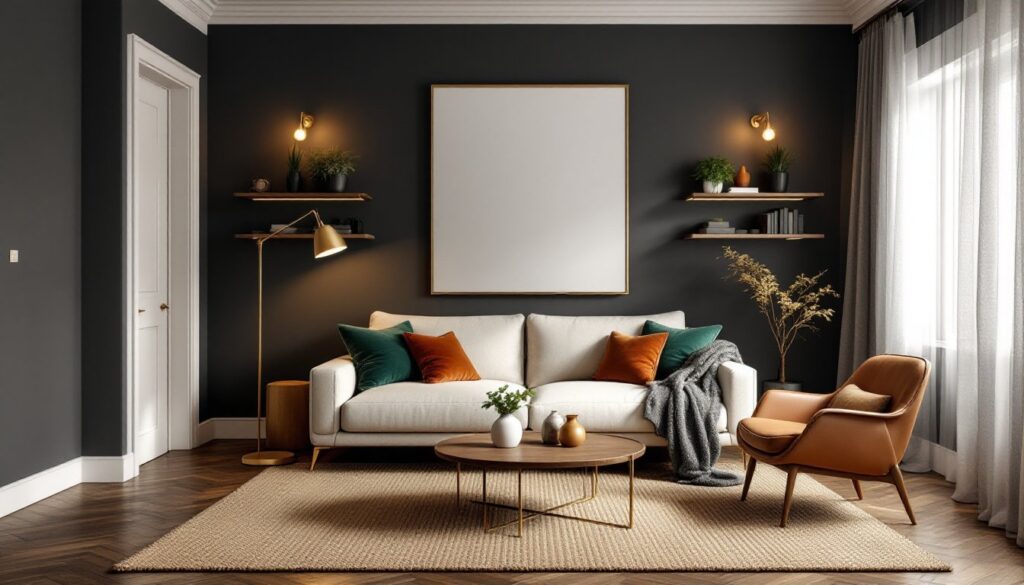
Lighting is non-negotiable in a dark living room. A single overhead fixture won’t cut it, you need multiple light sources at different heights to avoid a dungeon effect. Start with ambient lighting: recessed cans (4-inch or 6-inch) spaced 4–6 feet apart provide even coverage. Use warm white bulbs (2700K–3000K) to counteract the coolness of dark walls. Avoid daylight bulbs (5000K+): they’ll make the space feel clinical.
Add task lighting where you read, work, or do hobbies. Floor lamps with adjustable arms or tripod bases work well near seating. Swing-arm wall sconces save floor space and can be hardwired (requires an electrical box and may need a permit if you’re adding new circuits) or plug-in models if running new wiring isn’t feasible.
Accent lighting adds depth. Picture lights, LED strip lighting behind floating shelves, or uplighting on tall plants create layers that make the room feel larger. Dimmer switches (standard rotary or smart dimmers compatible with LED bulbs) let you adjust mood and energy use. Install dimmers on all circuits if possible, it’s easier to do during the painting phase when walls are clear.
If the room has limited natural light, don’t block windows with heavy drapes. Use sheer linen or lightweight cotton panels that diffuse light without sacrificing privacy. Alternatively, cellular shades (top-down/bottom-up styles) let you control light from both directions. Modern home decor ideas often emphasize maximizing natural light even in darker palettes.
Furniture and Textures That Complement Dark Walls
Dark walls make furniture stand out, so choose pieces that can hold their own visually. Light-colored upholstery, cream, beige, soft gray, provides contrast and prevents the room from feeling monochromatic. A linen sofa or a leather sectional in caramel or tan will pop against charcoal or navy without clashing.
Texture is your secret weapon. Flat, smooth surfaces disappear against dark walls: varied textures create visual interest. Think velvet cushions, wool throws, jute rugs, and woven baskets. A chunky knit blanket draped over a sofa arm, a sisal rug underfoot, or a reclaimed wood coffee table all add dimension. Avoid all-matte or all-shiny combinations, mix finishes to keep the eye moving.
Wood tones matter. Light woods (oak, ash, maple) and natural finishes brighten the space. Dark woods (walnut, mahogany) can work but need careful balancing, pair them with lighter accents or metallic hardware to avoid a cave effect. Mid-century modern furniture in teak or walnut looks particularly sharp against deep green or blue-gray walls.
Metallic accents, brass, gold, copper, or brushed nickel, reflect light and add warmth. Swap out builder-grade hardware (doorknobs, light switch plates, curtain rods) for upgraded finishes. It’s a small change that elevates the whole room. Check spectacular living room ideas for examples of how metallics interact with dark tones.
Strategic Use of Mirrors and Reflective Surfaces
Mirrors amplify light and create the illusion of space, both critical in dark moody living room ideas. Place a large mirror opposite a window to bounce natural light deeper into the room. A floor-to-ceiling leaner mirror (30″ x 70″ or larger) works well in corners or behind seating. Secure it with mirror clips or French cleats if you have kids or pets, leaning alone isn’t stable for high-traffic areas.
Mirrored furniture, side tables, consoles, or cabinet fronts, adds reflective surfaces without dominating wall space. Avoid overdoing it: too many mirrors can feel disorienting. One or two statement pieces are enough.
Glass and acrylic furniture (coffee tables, nesting tables, open shelving with glass inserts) keep the room feeling open. They take up physical space without adding visual weight, which helps in smaller rooms. Pair them with solid, grounded pieces to avoid a floaty, insubstantial look.
Reflective finishes on accessories, polished ceramic vases, lacquered trays, glass pendant shades, catch and redirect light. These don’t need to be expensive: thrift stores and online marketplaces often have vintage brass or chrome pieces that work beautifully once polished.
Adding Contrast with Trim, Ceilings, and Accent Pieces
Contrast prevents a dark living room from feeling flat or oppressive. The easiest way to introduce it is through trim and molding. Paint baseboards, crown molding, window casings, and door frames in bright white or off-white (White Dove, Chantilly Lace, Swiss Coffee). The sharp division between dark walls and light trim creates crisp, architectural lines.
If your living room has existing trim, prep it properly before painting. Sand lightly with 120-grit sandpaper, wipe with a tack cloth, and apply a bonding primer if the old paint is glossy. Use a satin or semi-gloss finish on trim, it’s more durable and easier to wipe down than flat or eggshell. A high-quality angled brush (2″ or 2.5″) gives cleaner lines than tape alone, though painter’s tape (FrogTape or 3M ScotchBlue) helps on long runs.
Ceiling color is up for debate. A white ceiling keeps the room feeling taller and brighter. A dark ceiling (matching the walls or one shade lighter) creates a cocooning effect that works in rooms with high ceilings (9 feet or more). If you go dark on the ceiling, add recessed lighting or surface-mount fixtures to prevent a cave-like feeling.
Accent pieces in bold colors, mustard yellow, burnt orange, emerald green, add energy without lightening the palette. Throw pillows, artwork, or a single statement chair can introduce color while keeping the overall mood sophisticated. Home design ideas often feature accent-forward palettes that balance drama with livability.
Conclusion
Dark living rooms aren’t for the timid, but they’re more approachable than most people think. Success comes down to prep, lighting, and balance, not luck. Test colors, layer light sources, and use contrast strategically. The result is a space that feels grounded, intentional, and anything but boring. If you’re tired of safe neutrals, this is the move.