
New flooring transforms a home faster than nearly any other upgrade, and it’s one of the first things buyers notice when evaluating a property. But between materials, labor, prep work, and hidden costs, installation pricing can swing wildly. Hardwood, laminate, vinyl plank, tile, engineered wood, each comes with its own price tag and installation quirks. Whether you’re budgeting for a single room or planning a whole-house overhaul, understanding what drives flooring installation costs will help you avoid sticker shock and make smarter decisions at the lumber yard or tile shop.
Table of Contents
ToggleKey Takeaways
- Flooring installation costs vary dramatically by material type, ranging from $3–$8 per square foot for laminate to $10–$25+ for natural stone, with labor accounting for 40–60% of the total price.
- Subfloor condition is the biggest cost wildcard—leveling concrete ($2–$5/sq ft) or replacing damaged plywood ($3–$7/sq ft) can significantly increase your flooring installation cost before materials even go down.
- Click-lock laminate, engineered wood, and peel-and-stick vinyl are ideal DIY projects that can save $2–$6 per square foot, while hardwood, large-format tile, and stone installations demand professional expertise and specialized tools.
- Hidden costs like subfloor prep, removal of old flooring, trim work, moisture barriers, and transitions often add $1–$4 per square foot—plan for a 10–15% budget cushion to avoid sticker shock.
- Geographic location, room complexity, and layout significantly affect pricing; metro areas charge 20–40% more than rural markets, and intricate patterns like herringbone or diagonal tile can double labor time compared to straight installations.
Average Flooring Installation Costs by Material Type
Flooring installation cost per sq ft varies dramatically based on the material you choose. National averages offer a baseline, but actual pricing depends on material grade, subfloor condition, regional labor rates, and project complexity. Here’s what to expect for the most common flooring types in 2026.
Hardwood Flooring Installation Costs
Solid hardwood installation typically runs $8 to $16 per square foot for materials and labor combined. Premium species like white oak or Brazilian cherry push toward the higher end, while domestic red oak sits closer to the midpoint. Labor alone accounts for roughly $3 to $8 per square foot, depending on whether you’re installing 3/4-inch tongue-and-groove planks with a nail-down method or using glue-down installation over concrete.
Prefinished hardwood costs more upfront but eliminates on-site sanding and finishing, which can add $2 to $4 per square foot if you choose unfinished boards. Factor in underlayment (about $0.50 to $1 per square foot) and trim work, and a 300-square-foot living room easily hits $3,000 to $5,500 installed.
Engineered hardwood offers a more budget-friendly alternative at $6 to $12 per square foot installed. It’s more stable in humid climates and often works as a floating floor over existing subfloors, cutting down on prep costs. Most DIYers with basic carpentry skills can tackle engineered planks, though professional installers ensure tighter seams and proper expansion gaps.
Laminate and Vinyl Flooring Installation Costs
Laminate flooring remains one of the most cost-effective options, with total installation running $3 to $8 per square foot. Mid-grade laminate with attached underlayment and an AC3 or AC4 wear rating sits around $5 to $6 per square foot installed. Labor costs drop because laminate installs as a floating floor using click-lock systems, no nails, glue, or specialty tools required beyond a tapping block and pull bar.
A laminate flooring installation cost calculator can help estimate materials based on room dimensions, but don’t forget to add 10% for waste and cuts around doorways or corners. For a 200-square-foot bedroom, expect to pay $600 to $1,600 total, depending on material quality and whether you’re handling demo yourself.
Vinyl plank flooring has surged in popularity thanks to waterproof cores and realistic wood-grain textures. Luxury vinyl plank (LVP) installation averages $4 to $10 per square foot, with $2 to $5 per square foot going to labor. Click-lock LVP installs much like laminate, while glue-down vinyl requires a perfectly smooth subfloor and adds $1 to $2 per square foot in prep costs if you’re patching concrete or leveling plywood.
A vinyl plank flooring installation cost calculator accounts for room shape and waste, but also ask about transition strips and quarter-round trim, those small details add $1 to $3 per linear foot. Sheet vinyl, still common in kitchens and bathrooms, runs $2 to $6 per square foot installed and demands professional seam work for larger spaces.
Tile and Stone Flooring Installation Costs
Ceramic tile installation ranges from $7 to $14 per square foot, with labor making up $5 to $10 per square foot of that total. Standard 12×12-inch porcelain tiles cost less to install than intricate mosaics or large-format rectified tiles, which require lippage-free setting and premium thin-set mortar. Grout, sealer, and cement backer board over wood subfloors add another $2 to $4 per square foot.
Installing tile over radiant heat mats or uncoupling membranes (like Schluter-Ditra) tacks on $3 to $6 per square foot but prevents cracking and adds resale value. For a 150-square-foot bathroom, budget $1,500 to $2,500 for mid-grade porcelain tile installed by a pro.
Natural stone, travertine, slate, marble, runs $10 to $25+ per square foot installed. Stone requires sealing, precision cuts with a wet saw, and experienced hands to avoid lippage or uneven joints. Labor alone often hits $8 to $15 per square foot, and stone tile weighs significantly more than ceramic, sometimes requiring subfloor reinforcement in older homes.
What Factors Affect Your Total Flooring Installation Price?
The average cost of flooring installation hinges on more than just material choice. Understanding these variables helps you build a realistic budget and avoid mid-project surprises.
Subfloor condition is the biggest wildcard. If your existing subfloor is level, dry, and structurally sound, you’re golden. But sagging joists, moisture damage, or out-of-level concrete slabs require remediation before any flooring goes down. Leveling a concrete floor with self-leveling compound costs $2 to $5 per square foot. Replacing damaged 3/4-inch plywood subfloor runs $3 to $7 per square foot including labor and materials.
Removal of old flooring adds to the bottom line. The average cost of flooring removal and installation together can increase your total by $1 to $4 per square foot depending on what’s coming out. Pulling up carpet and tack strips is straightforward and cheap. Chiseling up tile or adhesive-backed vinyl from concrete? That’s a full day of grunt work and potential asbestos testing if the home was built before 1980.
Room layout and complexity drive labor hours. A simple rectangular bedroom installs faster than a kitchen with cabinets, islands, and multiple doorways. Diagonal tile patterns, herringbone hardwood, or intricate borders can double labor time compared to straight-lay installations. Stairs add $40 to $100 per step for hardwood or laminate, including risers and nosing.
Geographic location shifts pricing significantly. Labor rates in metro areas or high-cost-of-living regions run 20% to 40% higher than rural markets. Material shipping costs also vary, stone tile delivered to a remote job site can add hundreds to the bill. When browsing a flooring installation cost calculator, adjust for your local market using cost guides updated for regional pricing.
Permits and inspections rarely apply to cosmetic flooring projects, but structural work (like sister-joists or subfloor replacement) may require a building permit. Budget $50 to $200 for permit fees if applicable.
Moisture barriers and underlayment are non-negotiable in certain installations. Floating floors over concrete need a 6-mil polyethylene vapor barrier (about $0.10 per square foot). Cork or foam underlayment for laminate or engineered wood adds $0.50 to $1.50 per square foot but reduces noise and absorbs minor subfloor imperfections.
Trim and transitions often get overlooked in estimates. Baseboards, quarter-round, T-molding, and reducer strips cost $1 to $4 per linear foot installed. If you’re replacing baseboards after flooring, paint-grade MDF trim is budget-friendly, while stain-grade hardwood trim matches solid wood floors but costs more.
DIY vs. Professional Installation: Cost Breakdown and Considerations
A homeowner with intermediate carpentry skills can handle most laminate, engineered hardwood, and vinyl plank installations, saving $2 to $6 per square foot in labor. But some flooring types demand professional expertise, specialized tools, or simply more muscle than a weekend DIYer can muster.
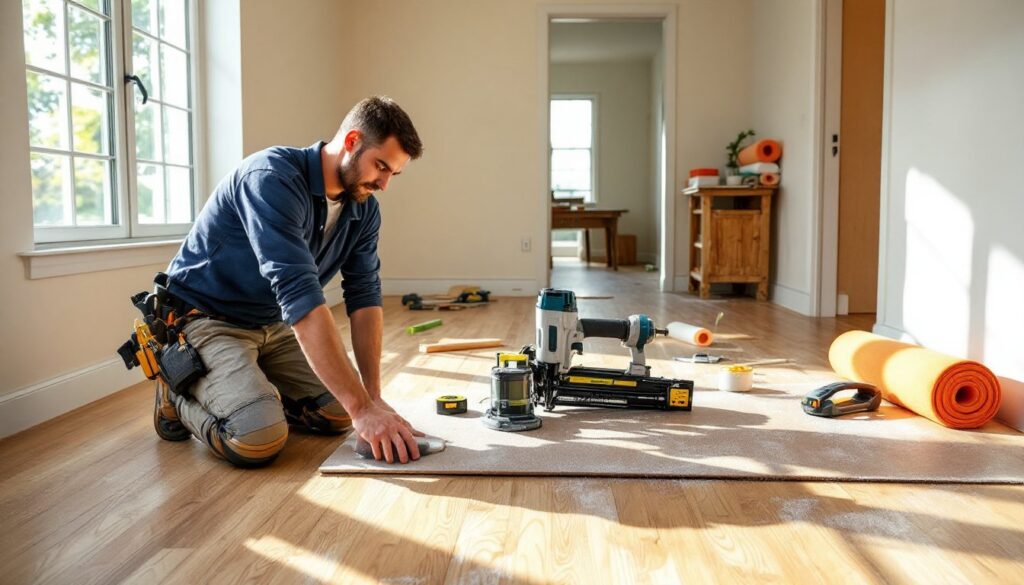
Best DIY candidates include click-lock laminate, floating engineered wood, and peel-and-stick vinyl tile. These systems forgive minor mistakes and don’t require expensive equipment beyond a miter saw (or circular saw with a guide), tapping block, pull bar, and a utility knife. Rental costs for a pneumatic flooring nailer or wet tile saw run $40 to $80 per day if you need them for a single project.
DIY laminate installation in a 300-square-foot room typically costs $900 to $1,500 in materials and tool rentals, compared to $1,500 to $2,400 for professional installation. That’s a savings of $600 to $900, but plan on two full days of work if you’re learning as you go.
When to hire a pro: Solid hardwood nail-down installation, large-format tile, natural stone, and any project requiring subfloor leveling or joist repair. Professionals carry liability insurance, warranty their work, and complete installs faster with fewer errors. A botched tile layout or uneven hardwood floor costs more to fix than hiring correctly the first time.
Professional flooring installation costs also include tools you won’t buy for a one-time project, pneumatic nailers ($300 to $600), laser levels ($100 to $400), and moisture meters ($50 to $200). Pros also know how to scribe planks around door casings, handle tricky transitions between rooms, and leave proper expansion gaps to prevent buckling.
Hybrid approach: Some homeowners pull up old flooring and prep the subfloor themselves, then hire a pro for the actual install. This cuts labor costs by 30% to 50% while ensuring the finish work looks clean. Just confirm with your installer that they’ll warranty work over a homeowner-prepped subfloor.
Permits and codes: Most cosmetic flooring installs don’t require permits, but structural work (like reinforcing joists or replacing subflooring) might. Check local building codes before starting, especially if you’re adding tile to a second story, which can exceed floor load ratings in older homes. Services like Angi connect homeowners with licensed contractors familiar with regional code requirements.
Tool investment vs. rental: If you’re planning multiple flooring projects, buying a quality miter saw ($200 to $400) and flooring nailer makes sense. For one-off jobs, rent. Most big-box stores offer daily or weekly tool rentals, and platforms like ImproveNet provide project cost breakdowns that include typical rental fees.
Conclusion
Flooring installation costs in 2026 span a wide range, but they’re predictable once you account for material choice, subfloor condition, and labor complexity. Whether you’re drawn to the timeless appeal of hardwood, the budget-friendly flexibility of laminate, or the durability of tile, plan for the full project scope, not just the sticker price on a box of planks. Run the numbers, weigh DIY against professional help, and build in a 10% to 15% cushion for the inevitable curveball. Good prep work and honest budgeting beat cutting corners every time.