
Converting a garage into an accessory dwelling unit (ADU) ranks among the smartest ways to add living space and rental income without expanding a home’s footprint. Whether the goal is housing a family member, generating passive income, or increasing property value, a garage conversion adu offers a faster, more affordable path than ground-up construction. The existing structure provides walls, a foundation, and roof, half the battle already won. But transforming a space designed for cars into a legal, livable dwelling requires careful planning, code compliance, and realistic budgeting. This guide walks through everything from zoning regulations to cost breakdowns, helping homeowners make informed decisions about their garage adu conversion.
Table of Contents
ToggleKey Takeaways
- A garage conversion ADU leverages an existing structure’s foundation and framing to create a self-contained rental unit or multigenerational living space at 50–60% lower cost than ground-up construction.
- Zoning compliance and permits are non-negotiable before starting design work; verify ADU eligibility with your local planning department, as requirements vary by jurisdiction and HOA restrictions may apply.
- Plumbing, electrical, and structural work require licensed professionals and permits to ensure code compliance and protect against insurance denials or property sale complications.
- Total garage conversion ADU cost typically ranges from $60,000 to $150,000 ($100–$200 per square foot), with plumbing and kitchen/bathroom finishes accounting for the largest expenses.
- DIY-friendly tasks like insulation, drywall, painting, and framing non-load-bearing walls can save $15,000–$30,000 in labor, while hiring professionals for critical systems ensures safety and regulatory compliance.
- Potential rental income of $1,200–$2,500 monthly combined with property value increases of 20–35% make a garage ADU conversion a financially sound long-term investment for most homeowners.
What Is a Garage Conversion ADU and Why Consider One?
A garage conversion ADU transforms an existing garage into a self-contained living unit with its own kitchen, bathroom, and sleeping area. Unlike a simple bedroom addition, an ADU functions as a separate residence, complete with independent utilities and a private entrance. The structure’s bones, foundation, framing, and roofing, already exist, which drastically cuts construction time and material costs compared to building a detached ADU from scratch.
Homeowners pursue garage adu conversions for several practical reasons. Rental income tops the list, especially in high-demand housing markets where a one-bedroom ADU can generate $1,200 to $2,500 monthly. Multigenerational living ranks second: aging parents or adult children gain independence while staying close. Property value increases typically range from 20% to 35%, though actual appreciation depends on local market conditions and the quality of the conversion.
The garage’s existing footprint also sidesteps setback requirements that often complicate new ADU construction. Most garages already meet minimum square footage for an ADU (typically 400-800 square feet), and the concrete slab provides a ready foundation. But, not every garage makes a good candidate. Single-car garages under 250 square feet rarely yield functional ADUs, and garages with severe foundation cracks, roof sagging, or water damage may cost more to repair than they save.
Planning Your Garage Conversion ADU: Zoning, Permits, and Regulations
Zoning laws determine whether a property qualifies for a garage ADU conversion before any design work begins. Most jurisdictions classify ADUs as accessory structures, subject to specific regulations on size, setbacks, parking replacement, and owner occupancy. Some cities require the primary homeowner to live on-site (either in the main house or the ADU): others waive parking replacement if the garage conversion eliminates existing parking spaces.
Start by contacting the local planning department to confirm ADU eligibility. Key questions include maximum allowable square footage (often 50% of the main dwelling’s size or 1,200 square feet, whichever is smaller), height restrictions, and whether the jurisdiction allows separate utility meters. States like California have streamlined ADU approvals, but individual cities still impose unique requirements. Covenant-controlled communities (HOAs) may prohibit ADUs entirely, regardless of municipal zoning.
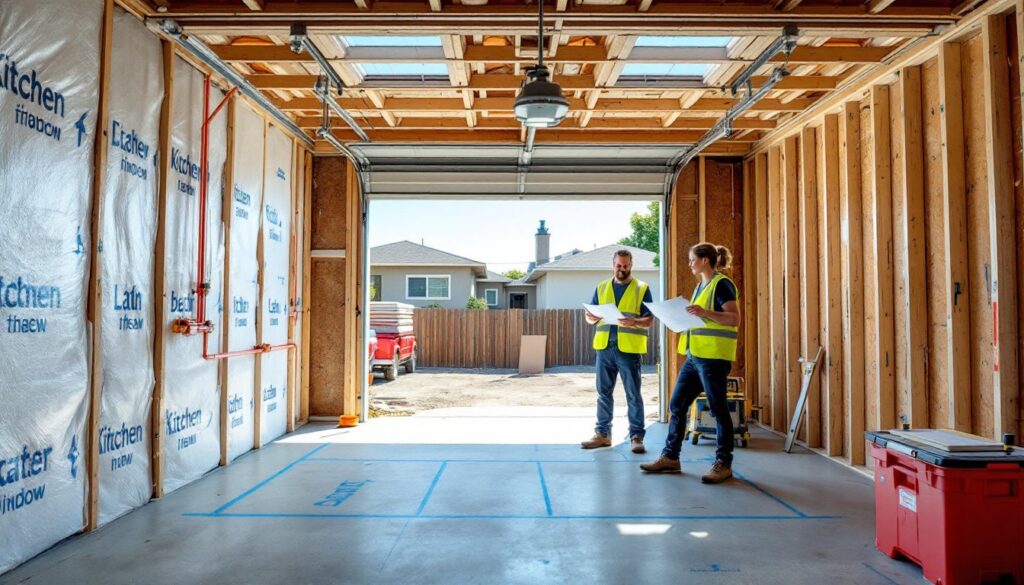
Permit requirements for an adu garage conversion typically include building, electrical, plumbing, and mechanical permits. Expect plan reviews by the building department, which scrutinize structural modifications, egress windows, fire separation, and life-safety systems. A structural engineer may need to certify that the existing foundation and framing can support new loads from interior walls, plumbing fixtures, and HVAC equipment. Converting the garage door opening into a proper wall often requires a header beam sized to carry roof loads, typically a double or triple 2×10 or engineered lumber like an LVL (laminated veneer lumber).
Permit costs vary widely, $1,500 to $5,000 in smaller municipalities, $5,000 to $15,000 in metro areas with rigorous review processes. Timeline from application to approval ranges from 6 weeks to 6 months. Skipping permits might seem tempting, but unpermitted ADUs create serious problems: difficulty selling the home, insurance denials, and potential orders to remove improvements.
Design Considerations for Converting Your Garage into an ADU
Designing a functional ADU within a garage’s fixed dimensions requires balancing livability, code compliance, and budget. The existing slab and walls dictate the floor plan’s outer limits, but interior layout determines whether the space feels cramped or comfortable.
Layout and Floor Plan Options
Most garage conversions follow a studio or one-bedroom layout. Studios (400-600 square feet) work well for single occupants or couples, combining sleeping, living, and kitchen areas into one open zone with a partitioned bathroom. One-bedroom layouts (600-800 square feet) add a separate bedroom, improving privacy and rental appeal.
Key spatial priorities include:
- Ceiling height: Garages typically have 8- to 10-foot ceilings, meeting code minimums (7.5 feet for habitable rooms). Expose roof trusses if additional height is needed, but verify with an engineer that trusses weren’t designed as load-bearing.
- Natural light and egress: Building codes require egress windows in sleeping areas, typically a minimum 5.7 square feet of opening with a 24-inch-high by 20-inch-wide clear opening. Garages often lack sufficient windows, so budget for cutting openings and installing code-compliant egress windows.
- Kitchen footprint: Efficient kitchenettes fit in 60-80 linear inches along one wall. Include a two-burner cooktop or apartment-size range, small refrigerator, and sink. Compact appliances save space without sacrificing function.
- Bathroom placement: Position bathrooms along an exterior wall to simplify plumbing venting and drainage. A 5×8-foot bathroom accommodates a toilet, vanity, and 32×60-inch shower.
Doorways and circulation paths matter more in tight layouts. Maintain 36-inch-wide hallways and doorways where possible. Pocket doors save swing space in bathrooms and bedrooms.
Essential Systems: Plumbing, Electrical, and HVAC
Adding full utilities transforms a garage into a legal dwelling, but each system involves significant work.
Plumbing: Running supply lines and drain-waste-vent (DWV) pipes ranks among the costliest aspects of a garage adu conversion cost. If the garage sits on a slab, plumbers must cut trenches into the concrete to install 3-inch or 4-inch PVC drain lines that connect to the main sewer lateral. Supply lines (hot and cold water) typically run through walls or attic spaces. Budget $8,000 to $15,000 for full rough-in and finish plumbing, including fixtures.
Electrical: ADUs require a separate electrical subpanel fed from the main house panel, typically a 100-amp service. Circuits must meet current National Electrical Code (NEC) standards: GFCI-protected outlets in kitchens and bathrooms, AFCI-protected circuits in living areas, and dedicated 20-amp circuits for kitchen appliances. Hiring a licensed electrician ensures code compliance and permits. Electrical work for an ADU typically runs $5,000 to $10,000.
HVAC: Garages lack insulation and climate control, so adding heating and cooling is non-negotiable in most climates. Mini-split heat pumps rank as the most popular choice, they don’t require ductwork, provide both heating and cooling, and operate efficiently. A 12,000-BTU single-zone mini-split handles most 500-700 square foot ADUs. Installation costs range from $3,000 to $6,000. Alternatively, extending the main house’s forced-air system works if the existing furnace and air handler have spare capacity and the garage sits close enough for efficient duct runs.
Insulation upgrades are mandatory. Walls need R-13 to R-15 fiberglass batts or spray foam: ceilings require R-30 to R-49 depending on climate zone. Don’t skip the garage door wall, insulating and drywalling the former opening prevents heat loss and provides a proper interior finish.
Cost Breakdown: What to Budget for Your Garage ADU Conversion
Understanding the garage conversion adu cost helps homeowners set realistic budgets and avoid mid-project surprises. Total expenses vary based on size, finishes, and regional labor rates, but most garage adu conversion cost projects fall between $60,000 and $150,000, roughly $100 to $200 per square foot.
Major cost categories include:
- Permits and design: $3,000-$10,000 for architectural plans, engineering stamps, and permit fees.
- Foundation and structural work: $2,000-$8,000 for slab repairs, reinforcing walls, or installing a new header beam over the garage door opening.
- Framing and insulation: $5,000-$12,000 for interior partition walls, insulating exterior walls and ceiling, and framing window/door openings.
- Plumbing rough-in and fixtures: $8,000-$15,000 for trenching, piping, and installing a toilet, shower, sink, and kitchen fixtures.
- Electrical rough-in and panel: $5,000-$10,000 for subpanel installation, wiring, outlets, and lighting.
- HVAC installation: $3,000-$8,000 for a mini-split system or ductwork extension.
- Drywall and interior finishes: $6,000-$12,000 for hanging and finishing drywall, trim, doors, and paint.
- Flooring: $2,000-$6,000 for luxury vinyl plank (LVP), laminate, or tile over the existing slab.
- Kitchen and bathroom: $8,000-$20,000 for cabinets, countertops, appliances, vanity, and shower/tub.
- Windows and exterior doors: $2,000-$6,000 for egress windows and a new exterior entry door with hardware.
Labor typically represents 50-60% of total costs in most markets. DIYers can reduce expenses by handling demo, insulation, drywall, painting, and trim work, but plumbing, electrical, and structural modifications almost always require licensed professionals. Certain regions with high demand for home improvement contractors see inflated labor costs, pushing total expenses toward the upper end of the range.
Financing options include cash-out refinancing, home equity loans, or construction loans. Some municipalities offer ADU-specific loan programs with favorable terms. Calculate potential rental income against monthly loan payments to gauge return on investment, many ADUs achieve positive cash flow within 5 to 10 years.
DIY vs. Hiring Professionals: What You Need to Know
Homeowners with solid carpentry and project management skills can tackle portions of a garage conversion ADU, but this isn’t a beginner-level project. Knowing which tasks require licensed pros versus which allow DIY work determines both safety and code compliance.
DIY-friendly tasks include demolition (removing old drywall, clearing out storage), insulation installation (fiberglass batts in walls and ceilings), drywall hanging and finishing, interior painting, trim carpentry, and flooring installation. Experienced DIYers can also frame non-load-bearing partition walls using 2×4 studs on 16-inch centers. These tasks don’t require permits and offer substantial labor savings, potentially $15,000 to $30,000 on a full conversion.
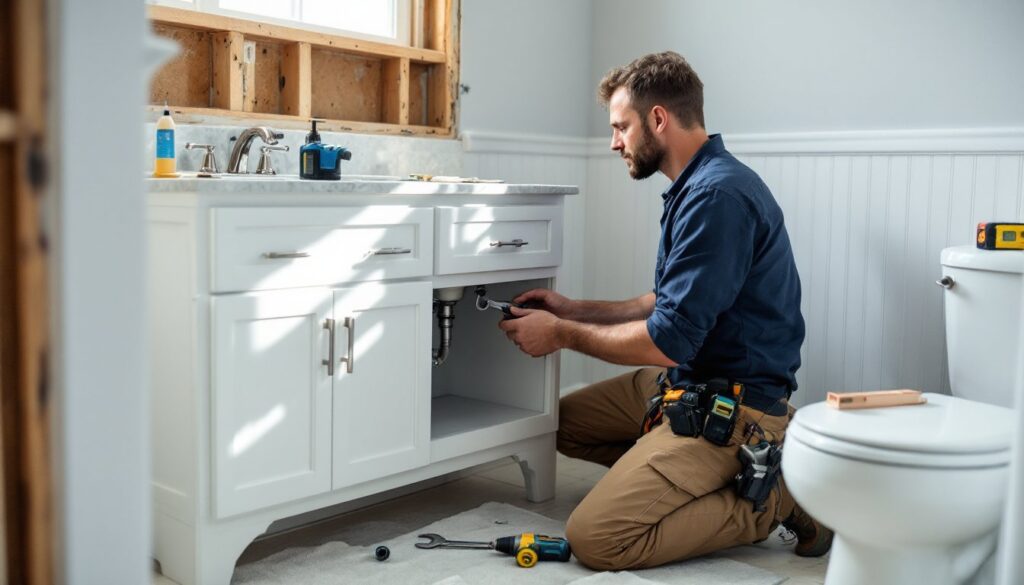
Licensed professional tasks include anything structural (removing walls, installing load-bearing headers), all electrical work (subpanel, circuits, fixtures), and plumbing (cutting slab, installing drain lines, venting). Most jurisdictions require permits and inspections for these trades, and pulling permits as an unlicensed homeowner carries limitations, some areas prohibit owner-builders from performing electrical or plumbing work even on their own property. If the homeowner plans to rent the ADU, hiring licensed contractors protects against liability and ensures work meets code.
Hybrid approaches work well: hire a general contractor to handle structural, plumbing, and electrical rough-ins, then DIY the finish work. This keeps critical systems up to code while allowing hands-on involvement in less technical tasks. General contractors typically charge 15-25% markup on subcontractor labor, so hiring trades directly (if allowed by local law) can save money, but it requires coordinating schedules, inspections, and sequencing.
Timeline matters too. A full garage adu conversion with professionals takes 3 to 6 months from permits to final inspection. DIY-heavy projects often stretch to 6 to 12 months due to evenings-and-weekends schedules and learning curves. Before committing to DIY, honestly assess available time, skill level, and tolerance for setbacks. Resources like This Old House provide project-specific guidance, while platforms like Bob Vila offer detailed tutorials on everything from insulation to finish carpentry.
Whether going DIY or hiring out, prioritize safety. Wear safety glasses, dust masks (N95 or better for insulation and drywall dust), gloves, and hearing protection when using power tools. Cutting concrete slabs for plumbing trenches generates silica dust, use wet-cutting methods and respirators rated for silica. Electrical work poses shock and fire risks: if there’s any uncertainty, call a licensed electrician. Saving a few hundred dollars isn’t worth a code violation, injury, or insurance claim.