
Installing a dishwasher isn’t just about picking a model and sliding it into place. Between electrical work, plumbing hookups, and cabinet modifications, the cost to install a dishwasher can swing wildly depending on what’s already in place. Whether you’re swapping out an old unit or cutting into fresh cabinetry for a first-time install, understanding the cost breakdown helps homeowners budget accurately and avoid sticker shock when the installer hands over the invoice. This guide breaks down real-world pricing, hidden fees, and the practical differences between DIY and professional installation.
Key Takeaways
- Dishwasher installation cost averages $285 in labor alone, ranging from $150–$250 for replacements to $400–$500+ for new installations requiring electrical or plumbing work.
- Replacements of existing dishwashers are significantly cheaper than new installations because they reuse existing hookups and cabinet space, saving homeowners hundreds in carpentry and infrastructure modifications.
- Hidden costs like permits ($50–$150), haul-away fees ($25–$75), electrical circuit upgrades ($150–$300), and air gap installation ($40–$70) can quickly add $500+ to the quoted price.
- DIY dishwasher installation is feasible for simple replacements with accessible hookups, but hiring a licensed professional is essential for new installations, electrical work, or when local code requires it.
- Strategic savings of $200–$400 are achievable by bundling contractor services, reusing supply lines, handling prep work yourself, and shopping during sales events like Black Friday or Memorial Day.
Average Cost to Install a Dishwasher
As of 2026, the cost to install a dishwasher typically ranges from $150 to $500 for labor alone, not including the appliance itself. The national average sits around $285, though regional labor rates and job complexity push that figure higher or lower.
A straightforward replacement where plumbing, electrical, and cabinet cutouts are already present usually lands on the lower end, $150 to $250. Installers simply disconnect the old unit, slide in the new one, and reconnect supply lines and power.
New installations requiring a dedicated electrical circuit, drain line modification, or cabinet trimming climb toward $400 to $500 or more. If the kitchen lacks an existing dishwasher cavity, expect carpentry charges to modify cabinetry, plus additional plumbing and electrical runs.
Material costs add another layer. A basic dishwasher supply kit (water line, drain hose, wire connector, and mounting brackets) runs $20 to $50. If the installer needs to add a dedicated 15- or 20-amp circuit per NEC code, that’s an extra $150 to $300 in electrical work. Permits, when required by local code, add $50 to $100 to the total.
Cost Breakdown by Installation Type
Understanding the difference between a replacement and a new installation is key to anticipating costs. Each type carries distinct labor requirements and material expenses.
New Installation vs. Replacement
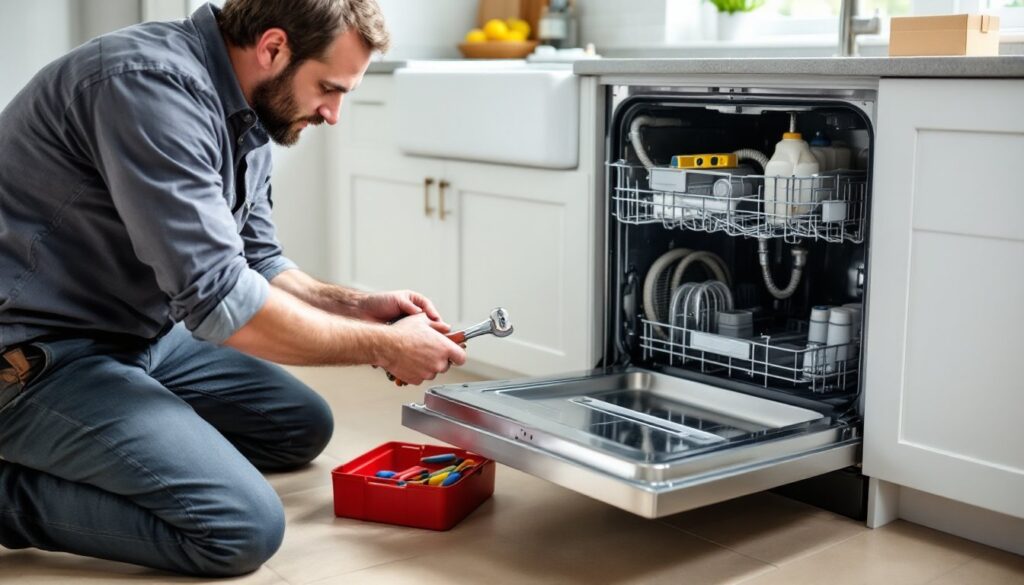
A replacement installation assumes the kitchen already has a dishwasher and all necessary hookups are in place. Labor involves:
- Disconnecting the old unit (water, drain, power)
- Removing and disposing of the existing appliance (some installers charge $25 to $50 for haul-away)
- Connecting the new dishwasher to existing supply lines and electrical
- Leveling and securing the unit to adjacent cabinets
Total cost to replace dishwasher labor: $150 to $250, with the job typically completed in 1 to 2 hours.
New installations involve more invasive work. If the kitchen has a cabinet where the dishwasher will go, a carpenter needs to:
- Remove a base cabinet or trim an existing one to fit a 24-inch standard dishwasher opening (actual rough opening is typically 24 inches wide, 34 to 35 inches tall, and 24 inches deep)
- Cut a hole in the side panel for water and electrical access
- Possibly modify the countertop or kickplate
Plumbers extend the hot water supply line from the nearest sink or water source and install a dishwasher air gap or high loop for code compliance. Electricians run a dedicated circuit if none exists. Many jurisdictions require GFCI protection for dishwashers per NEC Article 422.5.
Total cost to install a dishwasher from scratch: $400 to $800, depending on the distance of electrical and plumbing runs. Custom cabinetry or island installations can push costs over $1,000 when factoring in professional contractor rates and materials.
Factors That Impact Dishwasher Installation Costs
Several variables can inflate or reduce the final bill. Recognizing these upfront helps homeowners get accurate estimates.
Location and Labor Rates: Urban markets with higher costs of living see labor rates of $75 to $150 per hour, while rural areas may charge $50 to $80. Regional building codes also differ, some municipalities require licensed plumbers and electricians for all appliance hookups, adding to costs.
Existing Infrastructure: Homes with accessible shutoff valves, nearby outlets, and unobstructed cabinet space keep labor low. Older homes without a 3/8-inch compression fitting on the hot water line or lacking a dedicated electrical circuit require additional plumbing and electrical work.
Cabinet Modifications: If the dishwasher location needs cabinetry trimmed, replaced, or reinforced, expect carpentry fees of $100 to $300. Islands and non-standard openings demand custom fitting and extended drain lines, which can double installation time.
Electrical and Plumbing Upgrades: Installing a new 20-amp circuit (required for many modern dishwashers) or rerouting drain lines through walls or floors adds $200 to $500. Homes with galvanized steel supply lines may need repiping with PEX or copper for code compliance.
Permit and Inspection Fees: Jurisdictions that require permits for appliance installations charge $50 to $150, with inspections adding another $75 to $100. Not all localities mandate permits for simple replacements, but new circuits and plumbing modifications typically do.
Appliance Type: Built-in dishwashers are standard, but portable or drawer-style models have different hookup requirements. Portable units connect to a sink faucet and don’t require permanent plumbing, while drawer models may need custom electrical and water supply configurations.
DIY vs. Professional Installation: Is It Worth It?
A handy homeowner can tackle a dishwasher replacement if the existing hookups are straightforward and code-compliant. But not every job is DIY-friendly, and knowing where to draw the line saves time, money, and code violations.
When DIY Makes Sense: If you’re replacing an existing dishwasher with similar dimensions and all connections are accessible under the sink, DIY is realistic. You’ll need:
- Adjustable wrench for water supply line connections
- Screwdriver (Phillips and flathead) for mounting brackets and junction box cover
- Torpedo level to ensure the unit sits plumb (most dishwashers have adjustable leveling legs)
- Teflon tape for threaded fittings
- Wire stripper and wire nuts if hardwiring (some units use a plug-and-receptacle setup)
Expected time: 2 to 3 hours for a first-timer. Parts and materials run $20 to $50 for a basic supply kit.
When to Hire a Pro: Bring in licensed help if:
- You’re installing a dishwasher for the first time and need to run new plumbing or electrical
- The kitchen lacks a dedicated circuit and requires panel upgrades
- Local code mandates licensed work for appliance hookups
- You’re uncomfortable working with 120V electrical or modifying drain lines
Professional installation eliminates liability. If a DIY water connection leaks and damages flooring, homeowners insurance may not cover it. Licensed installers carry liability coverage, and their work is typically warrantied.
Safety Considerations: Always shut off the circuit breaker and water supply before starting. Use a non-contact voltage tester to confirm power is off before touching wires. Dishwashers require proper grounding per NEC standards, never bypass the ground wire to make a connection fit.
Most home improvement projects benefit from a realistic assessment of skill level. If you’ve never soldered copper or worked inside a breaker panel, the cost to hire a pro is cheaper than repairing flood or fire damage.
Additional Costs to Consider
The base installation price rarely tells the whole story. Budget for these common add-ons to avoid surprise charges.
Disposal and Haul-Away: Many installers charge $25 to $75 to remove and dispose of the old dishwasher. Some retailers include free haul-away with appliance purchase, so ask before hiring a separate service.
Supply Line and Drain Hose Upgrades: Standard kits include 6-foot hoses, but if the water supply or drain is farther away, longer lines cost $15 to $40 extra. Braided stainless steel supply lines are more durable than plastic or rubber and worth the $10 to $20 upcharge.
Air Gap or High Loop Installation: Some codes require an air gap device installed on the countertop or sink deck to prevent backflow. Air gaps cost $10 to $20, plus $30 to $50 in labor to drill a hole and mount. Alternatively, a high loop (drain hose looped to the underside of the countertop) achieves similar protection without visible hardware.
Soundproofing and Insulation: If the dishwasher shares a wall with living space or a bedroom, adding soundproofing blankets or spray foam insulation reduces noise. Materials run $20 to $50, with installation adding 30 minutes to 1 hour.
Custom Panels: Integrated and panel-ready dishwashers require a custom cabinet panel to match surrounding cabinetry. Panels cost $100 to $400, depending on material and finish, with installation labor of $50 to $150.
Water Hammer Arrestor: Homes with high water pressure or quick-closing valves may experience water hammer (banging pipes). Installing an arrestor costs $15 to $30 in parts and $30 to $60 in labor.
Warranty and Service Plans: Extended warranties from retailers or manufacturers add $50 to $150 annually. Weigh the cost against typical repair bills, most dishwashers have reliable mechanical components and rarely need major work in the first five years.
How to Save Money on Dishwasher Installation
Strategic planning and a bit of legwork can trim hundreds off the final bill without compromising quality or safety.
Buy During Sales Events: Retailers discount appliances heavily during Memorial Day, Black Friday, and Labor Day. Bundling a dishwasher purchase with installation often knocks $50 to $100 off labor costs. Some big-box stores offer free installation with qualifying purchases.
Reuse Existing Supply Lines: If the old dishwasher’s water supply line and drain hose are in good condition (no kinks, cracks, or corrosion), reusing them saves $20 to $50. Inspect fittings carefully, replace if there’s any doubt.
Handle the Prep Work: Installers charge for tasks like clearing out the cabinet, removing the old unit, or moving the dishwasher to the installation site. Do these yourself and save $50 to $100 in labor.
Get Multiple Quotes: Compare estimates from at least three installers. According to recent industry data, quotes can vary by 20% to 40% for identical work. Ask for itemized breakdowns to identify padding or unnecessary charges.
Ask About Package Deals: Plumbers and electricians who regularly install dishwashers often offer discounted rates when you buy both services together. Bundling electrical and plumbing work with a single contractor saves coordination time and may reduce the total by $75 to $150.
DIY the Simple Parts: If you’re comfortable with basic plumbing, handle the water and drain hookups yourself, then hire an electrician solely for the electrical connection. Splitting the job can reduce total labor costs by half.
Skip Cosmetic Add-Ons: Panel-ready models and custom trim kits look sleek but add significant cost. A standard stainless or black finish blends into most kitchens without custom work.
Check Manufacturer Rebates: Some dishwasher brands offer rebates or promotional credits toward installation. Check the manufacturer’s website or ask at the point of purchase, these can range from $25 to $100.
By understanding the cost drivers and planning ahead, homeowners can install or replace a dishwasher without breaking the budget or sacrificing code compliance and safety.