
Most homeowners fire up the furnace on the first cold night and hope for the best. That’s a gamble. A well-maintained furnace runs safer, lasts longer, and costs less to operate, but what does that maintenance actually cost? In 2026, homeowners should expect to spend between $80 and $200 for a standard annual tune-up, though prices vary by region, system type, and service provider. Understanding what drives those costs, and where to cut corners safely versus where you shouldn’t, makes the difference between a predictable expense and an emergency repair bill in January. This guide breaks down the real numbers, what’s included in professional service, and which tasks DIYers can tackle to keep yearly furnace maintenance costs under control.
Key Takeaways
- Professional furnace maintenance cost typically ranges from $80 to $200 annually, with the national average around $120 to $150, depending on region, system type, and service provider.
- A standard furnace tune-up includes critical safety checks like heat exchanger inspection, combustion analysis, thermostat calibration, and flue pipe inspection to ensure efficient and safe operation.
- Homeowners can safely reduce furnace maintenance cost by performing DIY tasks like monthly filter changes, keeping the area around the furnace clear, and checking condensate drain lines.
- Signing up for annual maintenance plans ($150 to $250/year) that bundle furnace and AC tune-ups often saves money and includes priority scheduling and repair discounts.
- Scheduling furnace maintenance in late summer or early fall before peak demand can yield lower prices or promotional discounts of $20 to $50.
Average Cost of Professional Furnace Maintenance
The annual furnace maintenance cost typically ranges from $80 to $200 for a single visit, with the national average landing around $120 to $150. Regional variation plays a role: urban markets with higher labor costs (think Boston, Seattle, San Francisco) often see prices at the top of that range or higher, while rural areas and competitive markets in the Midwest or South may come in under $100.
System complexity affects pricing. A basic single-stage gas furnace with standard accessibility usually falls on the lower end. Two-stage or modulating furnaces, oil-fired systems, or units in tight crawl spaces or attics require more time and expertise, pushing costs higher. Electric furnaces tend to be cheaper to service due to simpler components and fewer combustion-related checks.
Many HVAC companies offer annual service agreements or maintenance plans that bundle furnace and air conditioning tune-ups for $200 to $400 per year. These plans often include priority scheduling, discounted repairs, and waived diagnostic fees, worthwhile if the homeowner values predictable budgeting and faster emergency response. According to data on furnace inspection pricing, standalone inspections average $80 to $200, which aligns closely with standard maintenance visits.
Seasonal timing matters. Scheduling service in late summer or early fall (before peak demand) often yields lower prices or promotional discounts. Waiting until the first cold snap can mean premium pricing or longer wait times.
What’s Included in a Standard Furnace Tune-Up
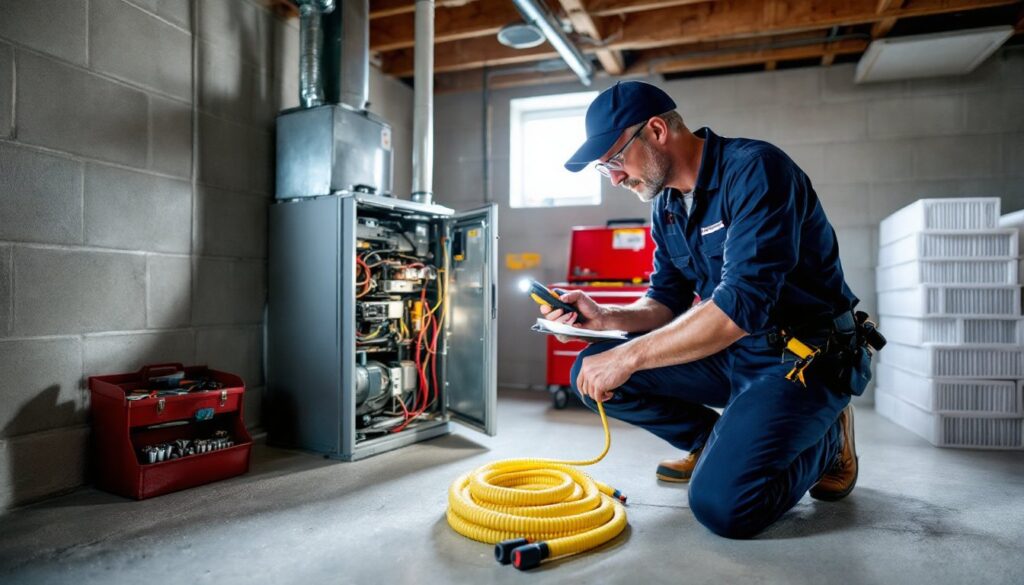
A professional furnace tune-up isn’t just a quick visual check. Expect the technician to spend 45 to 90 minutes on-site performing a standardized list of tasks. The cost of furnace maintenance covers labor, testing equipment, and minor adjustments, not parts or repairs beyond basic filter replacement.
Core tasks include:
- Inspecting and cleaning the burner assembly and combustion chamber. Carbon buildup reduces efficiency and can create safety hazards.
- Checking the heat exchanger for cracks or corrosion. A cracked heat exchanger can leak carbon monoxide, a critical safety issue that requires immediate replacement.
- Testing the thermostat calibration. Ensures the furnace cycles on and off at the correct temperatures.
- Inspecting and tightening electrical connections. Loose wiring causes inefficient operation or system failure.
- Lubricating the blower motor and bearings (if applicable, many modern motors are sealed and maintenance-free).
- Measuring airflow and static pressure. Verifies the blower is moving adequate air without strain.
- Testing safety controls: flame sensor, limit switch, pressure switches, and gas valve operation.
- Inspecting the flue pipe and venting system for blockages, corrosion, or improper draft.
- Changing or cleaning the air filter. Some techs include a standard 1-inch pleated filter in the service cost: others charge separately.
- Checking and adjusting gas pressure (for gas furnaces) to manufacturer specifications.
The technician should provide a written report noting system condition, efficiency readings, and any recommended repairs. If the furnace is still under warranty, keeping these service records proves compliance with manufacturer maintenance requirements.
Factors That Affect Furnace Maintenance Pricing
Not all furnace maintenance service costs are created equal. Several variables drive the final invoice.
System age and condition: Older furnaces (15+ years) often require more time due to part wear, obsolete components, or harder-to-access designs. Technicians may spend extra time diagnosing issues or sourcing compatible parts.
Fuel type: Gas furnaces require combustion analysis, gas pressure testing, and carbon monoxide checks. Oil furnaces need additional nozzle, filter, and fuel line inspections, often pushing the service cost $20 to $50 higher than gas. Electric furnaces have fewer components and simpler diagnostics, usually landing on the lower end of the price range.
Accessibility: A furnace in an open basement costs less to service than one crammed into a low crawlspace or attic. Tight quarters add labor time and physical difficulty.
Service provider type: Big national chains often charge more but may offer bundled plans and financing. Local independent contractors frequently price lower and provide more flexible scheduling. Always verify licensing, insurance, and reviews before hiring.
Geographic location: Labor rates vary widely. A tune-up in rural Alabama might cost $85, while the same service in metropolitan New York runs $180 to $220.
Add-on services: Some homeowners opt for duct cleaning (adds $300 to $500), upgraded air filters (HEPA or electrostatic models add $30 to $100), or humidifier maintenance (adds $50 to $75). These inflate the total bill but aren’t part of basic furnace maintenance.
Transparency matters. Request an itemized estimate before work begins, especially if the company charges a diagnostic fee (typically $50 to $100) that may or may not apply toward the service cost.
DIY Furnace Maintenance: What You Can Do Yourself
Homeowners can handle several maintenance tasks safely, reducing the yearly furnace maintenance cost without sacrificing reliability. None of these require specialized tools or HVAC certification.
Tasks safe for DIY:
- Replace the air filter monthly or quarterly. Use the size printed on the filter frame (common sizes: 16x20x1, 20x25x4). A clogged filter is the leading cause of furnace inefficiency and blower motor failure. Standard MERV 8 pleated filters cost $5 to $15 each and provide adequate filtration for most homes.
- Keep the area around the furnace clear. Combustible materials, storage boxes, and clutter create fire hazards and restrict airflow. Maintain at least 30 inches of clearance on all sides.
- Inspect the flue pipe for visible corrosion or disconnections. Don’t attempt repairs, but report issues to a technician immediately.
- Test the thermostat. Bump the set temperature up a few degrees and verify the furnace fires within a minute or two. If response is sluggish, replace the thermostat batteries (if applicable) or check the breaker.
- Vacuum visible dust from the blower compartment and burner area (with the power off). Use a shop vacuum with a crevice tool. Avoid disturbing wiring or components.
- Check the condensate drain line (for high-efficiency furnaces). A clogged drain causes the furnace to shut down. Flush with a 50/50 mix of white vinegar and water to prevent algae buildup.
Safety gear: Wear safety glasses, dust mask, and work gloves. Turn off power at the breaker and the furnace switch before opening panels.
When to Call a Professional vs. DIY
Certain tasks require licensed expertise and testing equipment. Don’t attempt these without proper training:
- Combustion analysis and gas pressure adjustment. Improper settings waste fuel, damage the heat exchanger, or create carbon monoxide hazards.
- Heat exchanger inspection. Cracks are difficult to spot without a scope or mirror tool, and a failed exchanger is life-threatening.
- Electrical diagnostics and flame sensor cleaning. While some handy homeowners clean flame sensors with fine emery cloth, mishandling can damage sensitive components or create ignition problems.
- Blower motor or capacitor replacement. Incorrect capacitor ratings burn out motors. High-voltage work requires understanding of electrical safety.
- Any work involving gas lines, pressure switches, or safety controls. Mistakes can cause gas leaks, explosions, or equipment failure.
If a furnace won’t fire, produces strange odors, or trips the breaker repeatedly, shut it down and call a pro. Some problems, like cracked heat exchangers or failed limit switches, are safety-critical and require immediate attention.
How to Save Money on Annual Furnace Service
Keeping the cost of furnace maintenance reasonable doesn’t mean skipping service. A few strategies reduce expenses without compromising quality.
Sign up for a maintenance plan. Many HVAC companies offer annual agreements ($150 to $250/year) covering one furnace tune-up, one AC tune-up, priority scheduling, and discounts on repairs (often 10% to 15% off). For homeowners who use both systems, the bundled cost usually beats paying for standalone visits. Contractors on Angi often advertise seasonal maintenance packages that include diagnostic fees and filter changes.
Schedule during the off-season. Book service in late August or September before demand spikes. Some companies offer early-bird discounts of $20 to $50 for scheduling ahead of the heating season.
Handle basic tasks yourself. Replacing filters, vacuuming the blower compartment, and keeping the area clear saves technician time and may reduce the service call duration, or eliminate unnecessary emergency calls.
Bundle services. If both the furnace and AC need seasonal maintenance, schedule them together. Many techs discount the second service by $20 to $40 when performed on the same visit.
Compare quotes from at least three providers. Prices vary significantly even in the same zip code. Request itemized estimates and ask whether diagnostic fees apply if no repairs are needed. Independent contractors often underprice franchise operations, but verify licensing and insurance.
Ask about senior, military, or first-time customer discounts. Many HVAC companies offer 10% to 15% off for these groups, especially during slower months.
Maintain year-round. Monthly filter changes and keeping vents unblocked prevent minor issues from escalating into costly repairs. A $12 filter changed on time can prevent a $400 blower motor replacement.
Avoid the temptation to skip annual service entirely. Resources like Today’s Homeowner emphasize that deferred maintenance shortens equipment lifespan and voids most manufacturer warranties, which require proof of annual professional service. A $150 tune-up beats a $5,000 mid-winter replacement.
Conclusion
Budgeting $80 to $200 annually for professional furnace maintenance is a small price for reliability and safety. Understanding what’s included, recognizing which tasks to DIY, and timing service strategically keep costs predictable. Skip the tune-up, and risk expensive emergency repairs or worse, carbon monoxide exposure. Treat furnace maintenance like an oil change: non-negotiable, affordable, and far cheaper than the alternative.