
Planning a bathroom remodel and wondering if a walk-in shower fits your budget? You’re not alone. Walk-in showers have become one of the most requested bathroom upgrades, combining accessibility, modern style, and a spa-like experience. But the price tag can range from a couple thousand to well over ten grand, depending on materials, size, and who’s swinging the hammer. This guide breaks down what homeowners actually pay in 2026, from prefab units to custom tile work, and where your money goes at each step of the project.
Key Takeaways
- Walk-in shower installation costs typically range from $3,500 to $10,000 in 2026, with $6,000 to $7,500 being the average for a mid-range remodel that includes materials, labor, and waterproofing.
- Prefab shower kits are the most budget-friendly option at $1,500 to $4,000 installed, while custom tile showers with premium fixtures and natural stone can exceed $12,000 to $20,000 depending on complexity and design choices.
- Labor accounts for 40% to 60% of total walk-in shower cost, with professional tile setters charging $10 to $25 per square foot and plumbers billing $75 to $150 per hour based on regional rates.
- You can save $500 to $2,000 by reusing the existing footprint for your walk-in shower rather than relocating drains and plumbing, and choosing standard sizes like 36″ x 48″ keeps material costs down.
- DIY installation is feasible for prefab units with basic plumbing skills, but custom tile showers require advanced expertise—consider hiring professionals for plumbing rough-in and final connections to ensure code compliance and prevent costly leaks.
Average Walk-In Shower Installation Costs
The average cost of a walk-in shower ranges from $3,500 to $10,000 for most homeowners in 2026, with $6,000 to $7,500 being the sweet spot for a mid-range installation. That includes materials, labor, plumbing adjustments, and any necessary tile or waterproofing work.
On the low end, a basic prefab walk-in shower installation can run as little as $1,500 to $3,000 if you’re replacing an existing shower with minimal plumbing changes. These are typically acrylic or fiberglass units that arrive ready to install.
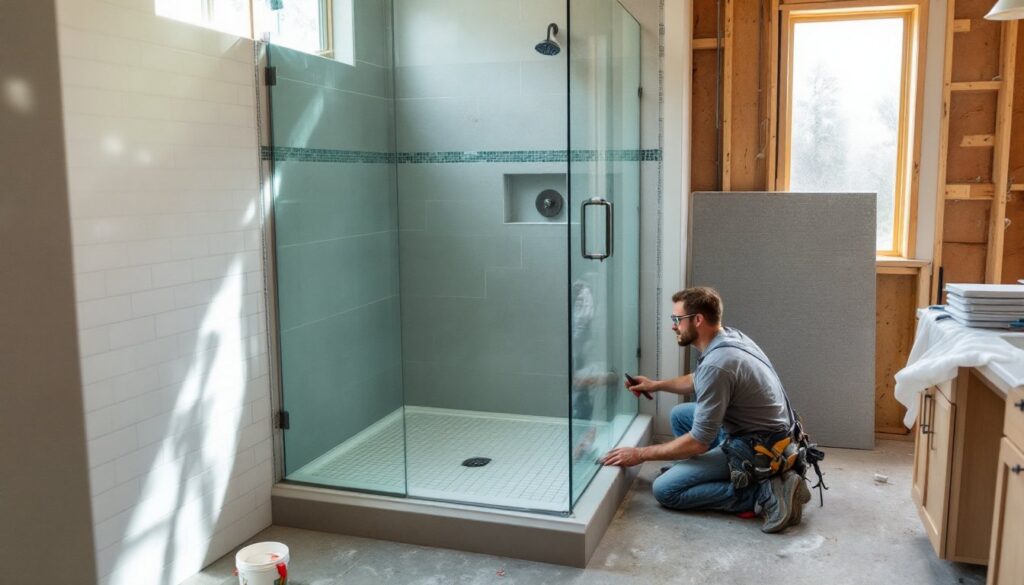
High-end custom tile showers with frameless glass doors, rainfall showerheads, built-in benches, and premium fixtures can easily push $12,000 to $20,000 or more. Luxury materials like natural stone, intricate tile patterns, and steam shower features all add up quickly.
According to recent shower remodel data, most homeowners budget around $6,500 for a complete walk-in shower remodel. That number assumes moderate material choices, standard-sized enclosures (roughly 36″ x 48″ or 48″ x 48″), and professional installation.
Keep in mind that regional labor rates make a big difference. Contractors in major metro areas charge $75 to $125 per hour, while smaller markets might see rates closer to $50 to $85 per hour. Material costs are fairly consistent nationwide, but freight charges for heavy stone or custom glass can add hundreds to the bill.
Cost Breakdown by Shower Type
Not all walk-in showers are created equal. The cost of walk-in shower installations varies widely depending on whether you choose a kit or go full custom.
Prefab vs. Custom Walk-In Showers
Prefab shower kits (also called modular or all-in-one units) are the budget-friendly option. These units arrive as molded fiberglass, acrylic, or composite panels that snap or bolt together. Expect to pay:
- $800 to $2,500 for the unit itself
- $1,500 to $4,000 total installed, including labor and basic plumbing hookup
- Installation typically takes 1 to 2 days
Prefab units work best for standard-sized openings and straightforward replacements. They’re waterproof out of the box, require minimal tile work, and come with built-in shelves or soap niches. The downside? Limited design flexibility and a somewhat “builder-grade” look.
Custom tile showers offer endless design possibilities but cost significantly more:
- $2,000 to $5,000 for materials (tile, cement board, waterproof membrane, grout, mortar)
- $5,000 to $15,000+ total installed, depending on tile choice and layout complexity
- Installation takes 3 to 7 days, sometimes longer for intricate patterns
Custom builds require a shower pan (pre-sloped or site-built with a liner), cement backer board or tile-ready panels, waterproofing membrane (like RedGard or Schluter-Kerdi), and skilled tile setting. Subway tile runs $5 to $15 per square foot installed, while large-format porcelain or natural stone can hit $25 to $50 per square foot or more.
Frameless glass enclosures add another $1,000 to $3,000 depending on size and hardware finish. Semi-frameless or framed doors cost $500 to $1,500.
For a walk-in shower with no door (curbless, barrier-free design), plan on additional waterproofing and floor slope work. These showers require careful pitch to prevent water from escaping, expect to add $500 to $1,500 to the base price for proper floor prep and drain placement.
Factors That Affect Walk-In Shower Pricing
Several variables push the walk-in shower installation cost up or down. Understanding these helps you make smart trade-offs.
Shower size: A standard 36″ x 48″ shower uses less tile, glass, and labor than a spacious 60″ x 60″ enclosure. Every additional square foot of tile work adds roughly $15 to $30 in materials and labor.
Plumbing relocation: Moving drains or supply lines means opening walls, rerouting pipes, and potentially hiring a licensed plumber. Budget $500 to $2,000 if the new shower isn’t in the same footprint as the old one. Rough-in plumbing for new valve bodies or added showerheads runs $300 to $800.
Waterproofing and prep: Proper shower waterproofing isn’t optional. Expect $300 to $800 for cement board, waterproof membrane (sheet or liquid), and seam/corner reinforcement. Skipping this step invites mold, rot, and expensive repairs down the road.
Tile type and pattern: Simple ceramic subway tile in a running bond pattern is the most affordable and fastest to install. Herringbone, chevron, or mosaic accents add 25% to 50% more labor time. Natural stone requires sealing and careful handling, bumping material and labor costs.
Fixtures and hardware: A basic single-handle valve and showerhead costs $150 to $400 installed. Upgrade to a thermostatic valve, body sprays, and a rain showerhead, and you’re looking at $800 to $2,500 or more. Finishes like matte black or brushed gold cost 15% to 30% more than chrome.
Built-in features: Recessed niches, benches, and curb details add both material and labor. A tile-ready niche insert runs $50 to $150, but expect another $100 to $300 in tile and labor to finish it. A built-in bench adds $300 to $800 depending on size and tile choice.
Permits and codes: Most jurisdictions require a permit for plumbing and waterproofing work, especially if you’re moving drains. Permit fees range from $50 to $300. Inspections ensure work meets the International Residential Code (IRC) for waterproofing, drainage slope, and fixture spacing.
Labor Costs vs. DIY Installation
Labor typically accounts for 40% to 60% of the total walk-in shower remodel cost. For a $7,000 shower, expect $2,800 to $4,200 to go toward contractor fees, tile setters, and plumbers.
Breaking it down by trade:
- Demolition: Removing an old tub or shower runs $300 to $800, depending on material (fiberglass vs. cast iron) and disposal fees.
- Framing and prep: Building or modifying walls, installing cement board, and waterproofing costs $500 to $1,500.
- Tile installation: Professional tile setters charge $10 to $25 per square foot installed, varying by tile size and pattern complexity.
- Plumbing: Licensed plumbers bill $75 to $150 per hour. A straightforward valve swap and showerhead install takes 2 to 4 hours: rerouting drains can take a full day or more.
- Glass door installation: Pros charge $300 to $800 for measuring, templating, and installing frameless glass panels.
Can you DIY a walk-in shower? Yes, but it’s an advanced project. Installing a prefab shower kit is within reach for a confident DIYer with plumbing experience. You’ll need:
- Basic plumbing skills (sweat copper or work with PEX fittings)
- Ability to level, shim, and secure panels to studs
- Understanding of waterproofing and code requirements
- 2 to 3 full days for a prefab install
Custom tile showers require intermediate to advanced skills: laying mortar beds or pre-sloped pans, applying waterproof membrane correctly, cutting tile (wet saw or tile cutter), and grouting/sealing. Mistakes lead to leaks, mold, and costly tear-outs. If you’ve never tiled before, this isn’t the place to start.
Safety note: Always wear safety glasses, gloves, and a dust mask when cutting cement board or tile. Use ear protection with power saws. Wet saws throw a lot of slurry, work outdoors or in a well-ventilated space.
DIYing the demo, prep, and tile work but hiring a plumber for rough-in and final hookup is a smart middle ground. You’ll save 30% to 50% on labor while ensuring code compliance and leak-free connections.
Ways to Save Money on Your Walk-In Shower Project
You don’t have to blow the budget to get a great walk-in shower. Here’s where to trim costs without sacrificing quality.
Stick with standard sizes: Custom-cut glass and non-standard shower pans cost more. A 36″ x 48″ or 48″ x 48″ base keeps material costs down and fits most bathrooms.
Choose prefab over custom tile: A quality acrylic or composite shower kit saves thousands compared to a full tile build. Modern prefab units look far better than the builder-grade fiberglass of the past.
Limit tile to accent areas: Use large-format porcelain tile (12″ x 24″ or bigger) on the main walls, fewer grout lines mean faster installation and lower labor. Save pricey mosaics or natural stone for a single accent strip or niche.
Reuse the existing footprint: Keeping the drain and supply lines in the same spot eliminates plumbing reroutes. That alone can save $500 to $2,000.
Go semi-frameless: A semi-frameless door offers a clean look at half the cost of fully frameless glass. You’ll still get the modern vibe without the custom hardware expense.
DIY the demo and finish work: Tearing out the old shower and hauling debris yourself saves $300 to $800. You can also handle painting, caulking, and installing accessories like grab bars or a handheld showerhead.
Shop sales and surplus: Many home centers run seasonal sales on shower kits, tile, and fixtures. Habitat for Humanity ReStores and salvage yards sometimes have new or gently used shower doors and tile at steep discounts.
Get multiple quotes: Contractor pricing varies widely. For home renovation projects, getting at least three estimates helps you spot outliers and negotiate better terms. Ask about labor-only rates if you’re sourcing materials yourself.
Time it right: Contractors are often more flexible on pricing during their slow season (late fall and winter in many regions). Booking off-peak can save 10% to 20% on labor.
Conclusion
Walk-in showers offer a blend of style, accessibility, and lasting value, but only if you budget realistically. Whether you’re installing a straightforward prefab kit or building a custom tile masterpiece, understanding where your money goes helps you make confident decisions. Focus on solid waterproofing, quality fixtures, and skilled labor where it counts. For contractor searches and detailed project planning, resources like Angi provide reviews and local cost benchmarks. With smart planning and a clear budget, that dream shower is closer than you think.