
Finding termites in your home ranks somewhere between discovering a leaky water heater and realizing you need a new roof, it’s expensive, urgent, and not something you can ignore. The cost of termite treatment varies wildly depending on your home’s size, the infestation severity, and which method you choose. In 2026, homeowners typically spend between $500 and $3,000 for professional treatment, though prices can climb higher for large-scale infestations or whole-structure fumigation. Before panic sets in, understanding how much termite treatment costs and what drives those prices helps you budget appropriately and avoid overpaying for unnecessary services.
Key Takeaways
- Termite treatment cost typically ranges from $500 to $3,000 for professional services in 2026, with the national average around $1,350 for a single-family home depending on infestation severity and treatment method.
- Liquid termite barrier treatments ($1,200–$2,500) work best for subterranean termites and provide 5–10 years of protection, making them more cost-effective over time than bait station systems that require ongoing annual monitoring ($300–$500 per year).
- Drywood termite treatment through tent fumigation costs $1,200–$2,500 or more and requires temporary home evacuation, while subterranean termite spot treatments for localized infestations run $200–$500.
- Home size, foundation type, regional labor rates, and accessibility directly impact termite treatment pricing, with properties in major metros and southern states experiencing 20–40% cost variations compared to rural areas.
- Professional termite treatment is strongly recommended for active infestations despite higher upfront costs, as DIY applications often miss critical areas and risk costly structural damage (averaging $5 billion annually in the U.S.) that homeowner’s insurance typically excludes.
- You can reduce termite treatment costs by obtaining multiple quotes, bundling services with annual pest control (saving 10–20%), addressing moisture and wood-contact issues before treatment, and scheduling work during slower seasons.
Average Cost of Termite Treatment by Method
The average cost of termite treatment depends heavily on which approach your situation requires. National averages in 2026 sit around $1,350 for a typical single-family home, but that number shifts based on treatment type, home size, and regional labor rates.
Liquid Termite Barrier Treatments
Liquid termiticides create a chemical barrier in the soil around your foundation, blocking termite access and killing colonies on contact. This method is most effective for subterranean termites, which account for roughly 95% of termite damage in the U.S.
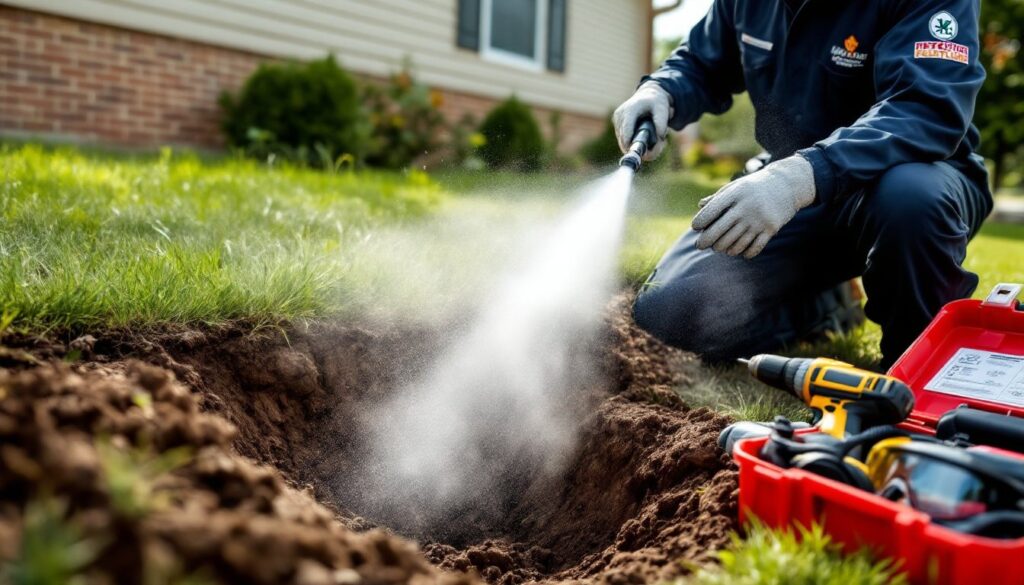
Cost range: $1,200–$2,500 for an average-sized home (1,500–2,500 sq ft). The termite treatment cost per square foot typically runs $0.50–$1.25, though steep lots requiring extensive trenching or homes with expansive crawlspaces push prices higher. The subterranean termite treatment cost includes trenching around the foundation perimeter, drilling through slabs or concrete porches, and injecting liquid termiticide into the soil.
Treatment lasts 5–10 years depending on product and soil conditions. Fipronil and imidacloprid are common active ingredients. Some companies offer warranties that cover retreatment if termites return during the coverage period, confirm what’s included before signing.
Spot treatments for localized infestations run $200–$500. The termite spot treatment cost covers smaller areas like a single wall cavity or deck post, but won’t protect your entire structure. Only use spot treatments when you’re certain the infestation hasn’t spread.
Termite Bait Station Systems
Bait stations use cellulose baits laced with slow-acting insect growth regulators. Termites carry the bait back to their colony, eventually eliminating the queen and collapsing the population. This method works for both subterranean and drywood termites but takes longer to achieve full colony elimination, often 3–6 months.
Installation cost: $1,500–$3,000 for initial setup, which includes placing 10–20 stations around your property perimeter (spacing varies by lot size). Annual monitoring and bait replenishment adds $300–$500 per year. The annual termite treatment cost for bait systems makes them pricier over time compared to one-time liquid barriers, but they’re less invasive and avoid introducing large volumes of pesticide into your soil.
Bait systems work well for homeowners concerned about chemical exposure, properties with wells or sensitive landscaping, and situations where trenching isn’t feasible (like homes with extensive concrete patios). Major providers include Sentricon, Advance, and Trelona. Installation requires a licensed pest control operator, this isn’t a DIY-friendly option even though what some marketing suggests.
Factors That Affect Termite Treatment Pricing
Several variables swing how much does termite treatment cost in your specific situation. Understanding these helps you evaluate quotes and spot inflated pricing.
Home size: Larger homes require more materials and labor. A 3,500 sq ft house costs significantly more than a 1,200 sq ft bungalow. Linear footage of foundation matters more than total square footage, a sprawling ranch-style home with a large perimeter costs more to treat than a two-story colonial with a smaller footprint.
Infestation severity: Light infestations caught early cost less than extensive damage requiring structural repairs. If termites have compromised floor joists, wall studs, or roof framing, you’re looking at pest control bills plus carpentry work. Get a full inspection to separate treatment costs from repair costs.
Termite species: Drywood termite treatment cost runs higher than subterranean treatment in many cases. Drywood termites nest inside wood (not soil), so treatment often requires tent fumigation at $1,200–$2,500 or more depending on home size. Fumigation involves sealing your entire house under a tarp and introducing sulfuryl fluoride gas for 24–72 hours. You’ll need to vacate, remove all plants and pets, and bag or remove food and medications. It’s effective but disruptive.
Foundation type: Slab foundations require drilling and pressure-injecting termiticide through concrete, adding labor time. Homes with basements or crawlspaces allow easier soil treatment but may need additional interior applications if termites have breached foundation walls.
Regional labor rates: Pest control costs vary by location. Services in major metros and high-cost regions run 20–40% above rural areas. Southern states with year-round termite pressure (Florida, Louisiana, Texas, Georgia) have competitive pricing due to market saturation, while homeowners in areas with seasonal activity sometimes pay premiums for specialized treatment.
Accessibility: Properties with dense landscaping, retaining walls, or extensive hardscaping (pavers, decks, driveways abutting the foundation) increase treatment difficulty and cost. Technicians may need to remove sections of decking or dig around obstacles to establish a continuous barrier. According to industry data tracked by home service cost guides, these access complications can add 15–30% to base treatment prices.
DIY vs. Professional Termite Treatment: Cost Comparison
DIY termite treatment appeals to budget-conscious homeowners, but understand the limitations before you start drilling holes in your foundation.
DIY liquid treatment using products like Termidor SC, Taurus SC, or Bifen I/T costs $100–$300 in materials for an average home. You’ll need a tank sprayer (preferably a 4-gallon model with a wand), drill and masonry bits, trenching tools, and appropriate PPE: chemical-resistant gloves, safety goggles, and a respirator rated for pesticide application. Most liquid termiticides are restricted-use pesticides requiring applicator certification in many states, verify your local regulations before purchasing.
The process involves trenching a 6-inch-wide, 6-inch-deep channel around your foundation perimeter, mixing product to the correct dilution (usually 0.06–0.125%), and applying 4 gallons per 10 linear feet of foundation. For slab foundations, you’ll drill holes every 12 inches along the perimeter and inject termiticide under pressure. This is labor-intensive work that takes a full weekend for most DIYers.
DIY success rate: Mixed. If you follow label directions precisely and treat the entire structure perimeter, DIY liquid barriers can work. But most homeowners underestimate the product volume needed, miss critical areas (like under porches or attached garages), or fail to establish a continuous barrier. Termites exploit even small gaps.
Professional treatment costs more upfront but includes expertise, proper equipment, and warranties. Licensed technicians know how to identify conducive conditions (moisture issues, wood-to-soil contact, construction gaps), locate hidden infestations, and ensure complete coverage. Most companies offer 1–5 year warranties with annual inspections included. If termites return during the warranty period, retreatment is free.
For active infestations, professional treatment is strongly recommended. Termites cause an estimated $5 billion in property damage annually in the U.S., and most homeowner’s insurance policies exclude termite damage. Saving $1,000 on DIY treatment makes no sense if you miss part of the colony and end up with $8,000 in structural repairs two years later.
When DIY makes sense: Preventative treatment on new construction before pouring a slab, treating a detached shed or garage, or applying borate wood treatments to exposed framing during renovation work. For whole-home treatment of an active infestation, hire a licensed professional.
How to Save Money on Termite Control
Termite treatment costs money, but you can reduce expenses without compromising effectiveness.
Get multiple quotes. Treatment pricing varies significantly between companies. Aim for at least three estimates from licensed, insured pest control operators. Estimates from local contractor networks help establish baseline pricing in your area. Beware of lowball quotes, they often come with hidden fees or inadequate coverage.
Bundle services. Many companies offer discounts if you combine termite treatment with annual pest control service. Bundling can save 10–20% on the cost for termite treatment.
Address conducive conditions. Before treatment, fix moisture issues (leaky gutters, poor drainage, plumbing leaks), remove wood-to-soil contact (mulch against siding, firewood stored against the foundation), and eliminate standing water. Reducing attractants can lower infestation severity and, in some cases, allow for less expensive spot treatment instead of whole-structure service.
Choose the right method. If you’re in a low-risk area with no active infestation, a monitoring-only bait system might suffice initially at lower cost than a full liquid barrier. Conversely, don’t pay for annual bait monitoring if a one-time liquid treatment suits your situation better.
Time your treatment strategically. Pest control companies sometimes offer discounts during slower seasons (late fall and winter in many regions). Termites remain active year-round in warm climates, but treatment scheduling flexibility can reduce costs.
Verify what’s included. Some companies advertise low base rates but charge extra for drilling, wood repair, retreatment, or annual inspections. Resources like home improvement cost calculators can help you compare total project costs including add-ons. Get everything in writing: treatment method, product used, coverage area, warranty terms, and what triggers free retreatment.
Maintain your treatment. Liquid barriers degrade over time, and bait stations require monitoring. Annual inspections (often $75–$150) catch problems early when spot treatment suffices instead of full retreatment. Think of it like HVAC maintenance, small ongoing costs prevent big emergency expenses.
Conclusion
Termite treatment costs range from a few hundred dollars for spot treatments to several thousand for whole-structure fumigation, with most homeowners spending $1,200–$2,500. The exact cost of a termite treatment depends on your home’s size, infestation severity, termite species, and treatment method. While DIY options exist for preventative applications, active infestations warrant professional treatment backed by warranties. Prioritize licensed pest control operators who provide detailed quotes, explain treatment specifics, and address underlying moisture or structural issues that attract termites in the first place.